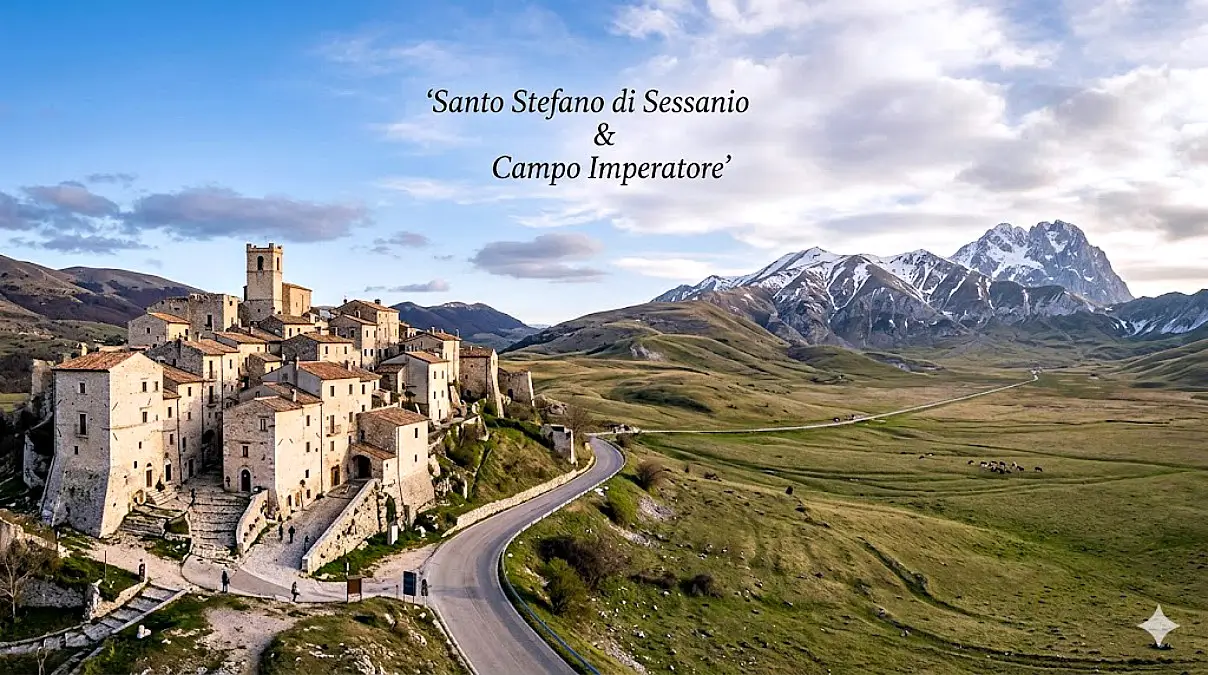
Santo Stefano di Sessanio & Campo Imperatore: Magical Medieval Stone Villages and Abruzzo’s “Little Tibet”
For a 3–5 day trip in Central Italy that feels wild, quiet, and completely different from Rome or Florence, Santo Stefano di Sessanio and Campo Imperatore make one of the most memorable combinations in Abruzzo.
This is a place where you can walk through a stone medieval village in the morning, drive or ride up to a vast mountain plateau in the afternoon, and end the day with views of the Gran Sasso massif, one of the most dramatic landscapes in the Apennines.
Santo Stefano di Sessanio sits in the province of L’Aquila, inside the wider landscape of the Gran Sasso and Monti della Laga National Park. It is known as one of the most atmospheric villages in Abruzzo, with narrow lanes, stone houses, arches, small squares, and a slow rhythm that makes it ideal for travellers who want something more authentic than a classic city break.
The village is also listed among I Borghi più Belli d’Italia, a network of some of Italy’s most beautiful historic villages.
Movie lovers may recognise this corner of Abruzzo from Ladyhawke, the 1985 fantasy film directed by Richard Donner and starring Michelle Pfeiffer, Rutger Hauer, and Matthew Broderick.
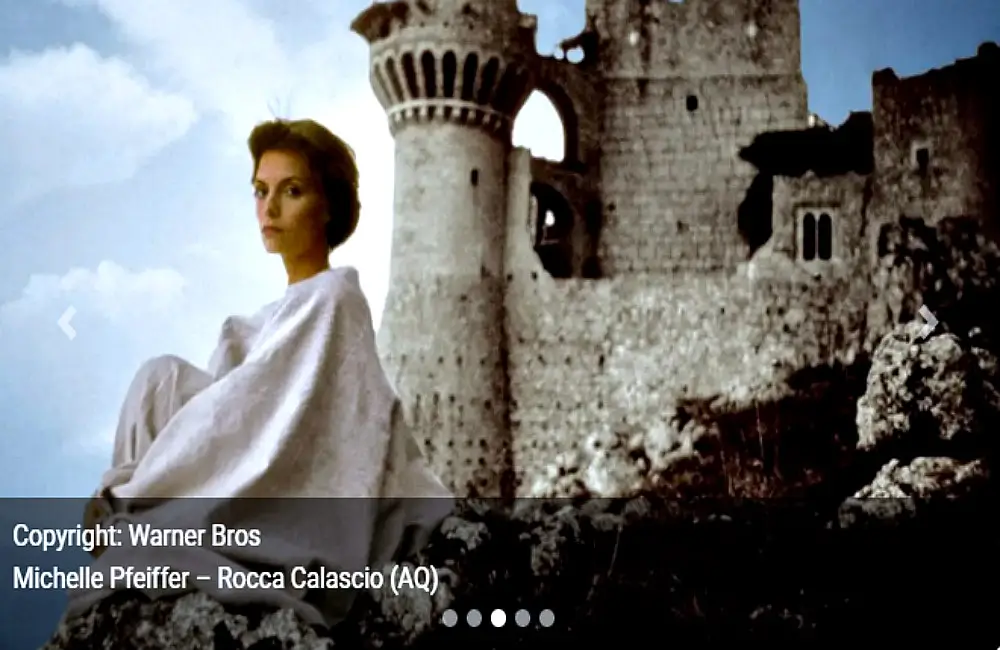
Several Italian locations were used in the film, but the landscapes around Campo Imperatore and Rocca Calascio, just a short distance from Santo Stefano di Sessanio, gave the story some of its most dramatic medieval atmosphere.
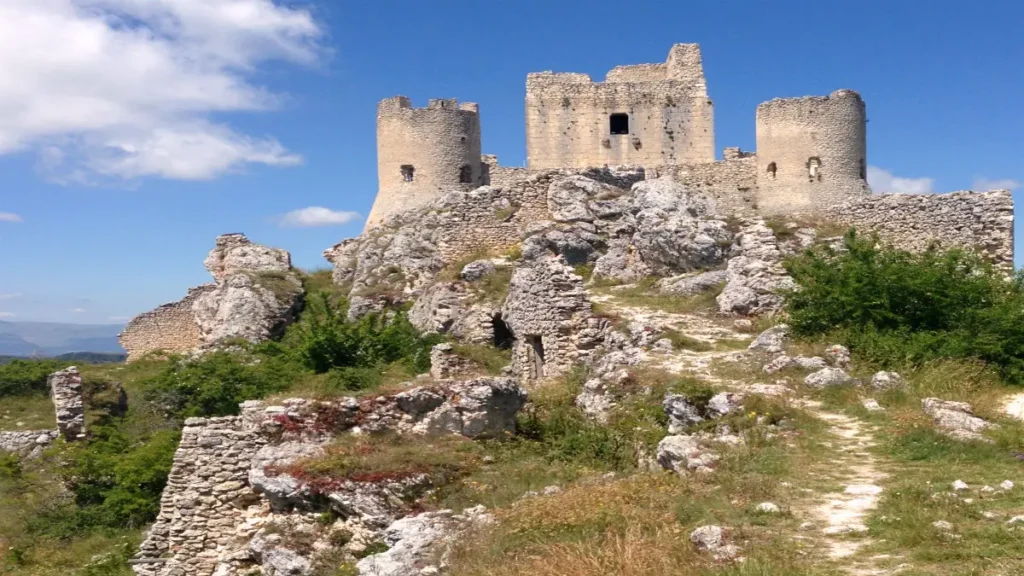
In the film, Rocca Calascio appears as the remote refuge of the monk Imperius. For the production, the fortress was slightly transformed with temporary scenic additions to its towers, making it look even more mysterious and fairytale-like.
The nearby open landscapes of Campo Imperatore also helped create the wild, timeless setting that makes Ladyhawke so memorable.
For visitors today, this adds an extra layer of charm to the trip: walking between Santo Stefano, Rocca Calascio, and Campo Imperatore is not only a journey through one of Abruzzo’s most beautiful mountain areas, but also a chance to step into one of Italy’s most atmospheric film locations.
Why Visit Santo Stefano di Sessanio?
It is not a village you visit for a long list of monuments. You visit it for the atmosphere. The beauty is in the stone walls, the silence, the medieval layout, the views over the mountains, and the feeling that time has slowed down.
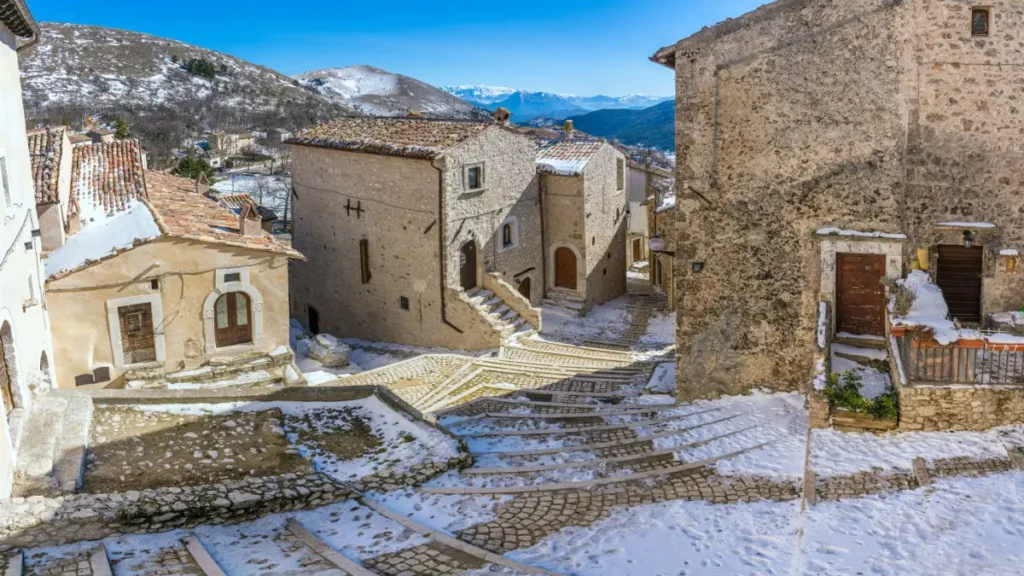
The village is built largely in pale limestone, with traditional roofs and a very harmonious architectural style. From above, it has the compact, almost cinematic look of a mountain settlement that has grown naturally out of the landscape.
It is also a good base if you want to explore the surrounding Gran Sasso area without staying in a larger town. From here, you can combine village walks, short hikes, Rocca Calascio, Castel del Monte, and Campo Imperatore in a compact itinerary.
Best things to do in Santo Stefano di Sessanio
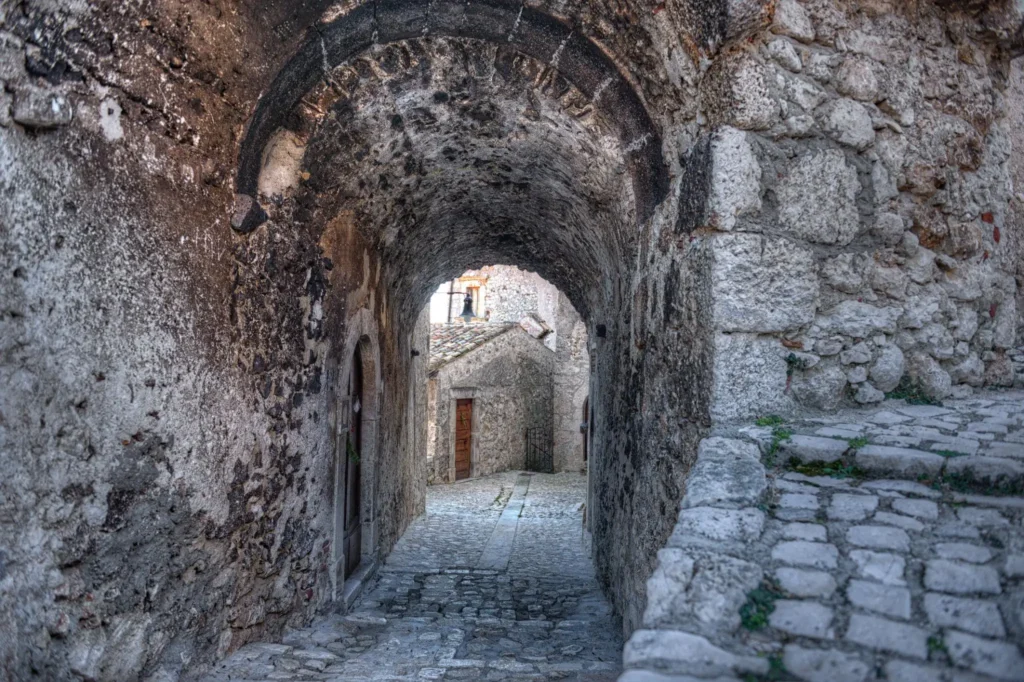
Start with a slow walk through the historic centre. There is no need to rush. Follow the stone lanes, pass under the arches, look for small artisan shops, and enjoy the mountain views from the upper parts of the village.
Then use Santo Stefano as a base for nearby stops. Rocca Calascio, one of Abruzzo’s most iconic hilltop fortresses, is very close and works perfectly as a half-day walk or short drive from the village. Abruzzo tourism describes Rocca Calascio as a medieval castle location famous also for its film-set atmosphere.
For food, this is a good area to look for traditional Abruzzo mountain dishes: lentils, lamb, local cheeses, simple pasta dishes, soups, and rustic trattoria-style meals. The experience is not about luxury dining; it is about mountain food, local ingredients, and warm interiors after a day outdoors.
Best things to do in Campo Imperatore
Drive across the plateau slowly and stop often. This is not a place where the road is just a way to reach a destination. The road itself is part of the experience.
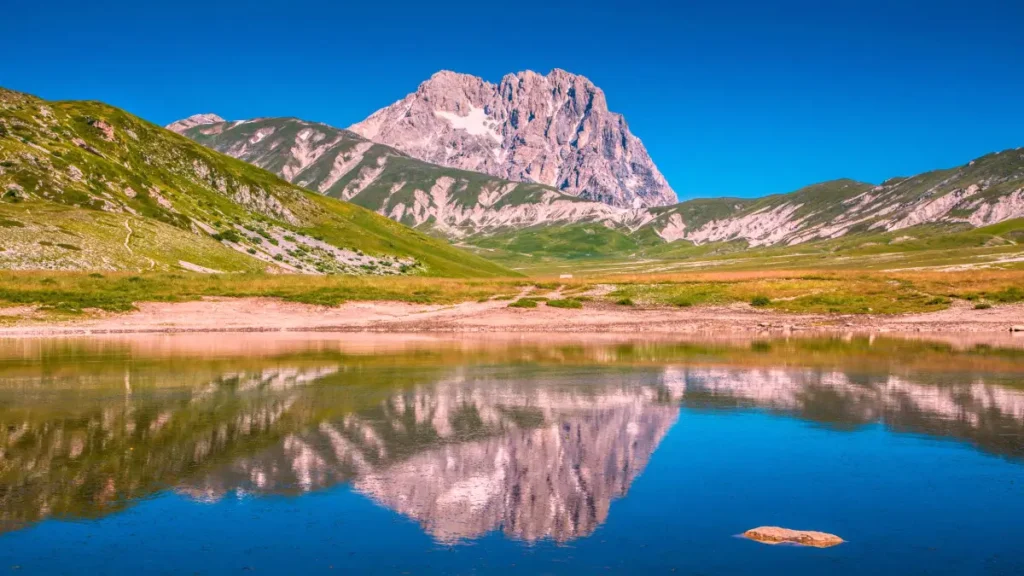
Look for views of Corno Grande, the highest peak of the Gran Sasso massif, and stop near the open grasslands for photos. On clear days, the light can be incredible, especially early in the morning or late in the afternoon.
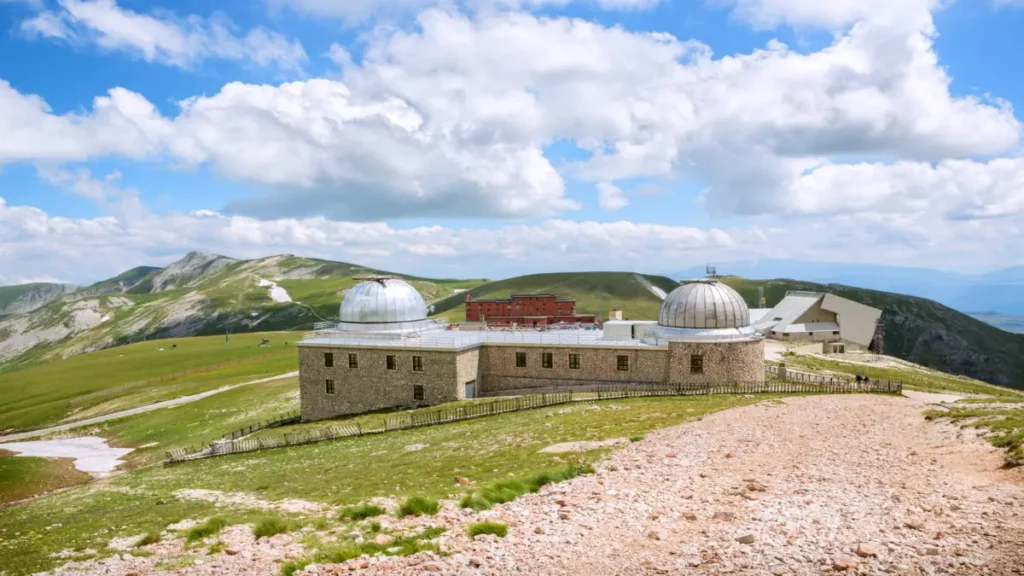
You can also reach the Campo Imperatore area via the Gran Sasso cable car from Fonte Cerreto, depending on operating conditions. Abruzzo tourism notes that Fonte Cerreto is the departure point for the cable car, and that it can be reached by car or bus, with access from the A24 via the Assergi exit.
Because road access and cable-car operations can vary with snow, weather, and seasonal reopening, it is worth checking the Centro Turistico del Gran Sasso before travelling. Their current notices specifically refer to the cable car service and the SP17 bis road that leads to Campo Imperatore.
How to Get There
The easiest way to visit Santo Stefano di Sessanio and Campo Imperatore is by car. Santo Stefano di Sessanio is around 60 km from L’Aquila and about 146 km from Rome, making it possible as a long day trip from Rome, but much better as part of a 2–3 day Abruzzo itinerary.
For Campo Imperatore, the main cable car access point is Fonte Cerreto, near Assergi. Travellers coming by road usually use the A24 and exit at Assergi before following signs toward Campo Imperatore. How to get there?
Public transport is possible but more limited. A car gives you more freedom, especially if you want to combine Santo Stefano, Rocca Calascio, Castel del Monte, and Campo Imperatore in the same short trip.
Best Time to Visit
The best time to visit is usually late spring, summer, and early autumn, when the mountain roads are more likely to be accessible, and the plateau is easier to explore.
Summer is ideal for long daylight hours, highland views, hiking, and photography. Autumn can be beautiful for clearer air, quieter villages, and cooler temperatures. Winter can be spectacular, especially with snow, but access may be more complicated and should be checked carefully before departure.
For Campo Imperatore specifically, always verify road and cable-car conditions close to your travel date, as the high altitude means the weather can change quickly.
Where to Stay
For the most atmospheric stay, sleep in Santo Stefano di Sessanio. It is ideal if you want a quiet evening, stone-house accommodation, and immediate access to the village atmosphere.
For more services, restaurants, and transport connections, L’Aquila is a more practical base. It works well if you are visiting without a car or if you want to combine this trip with other Abruzzo destinations.
For a road-trip feeling, you can also combine Santo Stefano di Sessanio with Castel del Monte, Calascio, and the wider Gran Sasso area.
Suggested 1-Day Itinerary
Morning: Santo Stefano di Sessanio
Arrive in Santo Stefano di Sessanio in the morning and spend the first part of the day wandering through the village. Keep the pace slow: this is the kind of place where the charm comes from details, not checklists. Walk through the alleys, photograph the stone houses, and stop for coffee or a simple local snack.
Late Morning or Lunch: Rocca Calascio
Continue to Rocca Calascio, either by car or on foot if you want a more active day. The fortress is one of the most photogenic places in Abruzzo, with wide views over the surrounding mountains and valleys. It pairs naturally with Santo Stefano because both places share the same quiet, historic, highland atmosphere.
Afternoon: Campo Imperatore
In the afternoon, head toward Campo Imperatore. The shift in scenery is dramatic: medieval stone village first, then vast open plateau. Give yourself time to stop for photos, short walks, and viewpoints. This is the part of the day when you should avoid rushing, especially if the weather is clear.
Evening: Return to Santo Stefano or L’Aquila
For the evening, return to Santo Stefano di Sessanio for a quiet village dinner, or continue to L’Aquila if you prefer a larger base with more accommodation and restaurant options.
Suggested 2-Day Itinerary
Day 1: Santo Stefano, Rocca Calascio and Calascio
Use the first day for the village side of the trip. Start in Santo Stefano di Sessanio, then visit Rocca Calascio and the small surrounding settlements. Stay overnight in Santo Stefano if you want the most atmospheric experience.
Day 2: Campo Imperatore and Gran Sasso Views
Use the second day for Campo Imperatore. Drive the plateau road if conditions allow, or use the Fonte Cerreto cable car when operating. Spend the day around the plateau, enjoying viewpoints, short hikes, photography stops, and the high-mountain scenery.
This two-day version is better than a rushed day trip because it gives you time to experience both sides of the area: the historic stone villages and the open mountain landscapes.
Plan Your Abruzzo Mountain Escape
Compare traveller reviews, nearby experiences, restaurants and practical travel ideas for Santo Stefano di Sessanio, Rocca Calascio and Campo Imperatore.
Rocca Calascio
Discover one of Abruzzo’s most cinematic hilltop fortresses, with dramatic views and unforgettable medieval atmosphere.
Explore Rocca Calascio on TripAdvisorCampo Imperatore
Check travel ideas for Abruzzo’s wild “Little Tibet”, from scenic drives to mountain viewpoints and Gran Sasso landscapes.
Explore Campo Imperatore on TripAdvisorSanto Stefano di Sessanio
Find inspiration for one of Abruzzo’s most beautiful stone villages, ideal for slow travel, photography and romantic mountain stays.
Explore Santo Stefano di Sessanio on TripAdvisorFAQ Section
Is Santo Stefano worth visiting?
Yes. Santo Stefano is one of the most atmospheric medieval villages in Abruzzo, especially if you enjoy stone architecture, quiet streets, mountain views, and slow travel. It is also part of the Borghi più Belli d’Italia network.
Can you visit Santo Stefano and Campo Imperatore in one day?
Yes, but it is a full day. A better plan is to spend one day around Santo Stefano di Sessanio and Rocca Calascio, then use a second day for Campo Imperatore and the Gran Sasso scenery.
Do you need a car for Campo Imperatore?
A car is the easiest option, especially if you want to stop at viewpoints and combine several villages. However, Campo Imperatore can also be reached via the Gran Sasso cable car from Fonte Cerreto when the service is operating.
What is Campo Imperatore famous for?
Campo Imperatore is famous for its vast high plateau, dramatic Gran Sasso mountain views, ski area, hiking routes, and wild open landscapes. It is often called “Little Tibet” because of its wide, high-altitude scenery.