
Denmark • Hygge Travel Guide
Denmark Hygge: Cozy Copenhagen Cafés, Fairytale Streets & Winter Magic
Your practical guide to the best hygge spots in Copenhagen—Paludan, La Glace, Absalon, Nyhavn, Tivoli, winter markets—plus fairytale escapes to Ærø and Aarhus.
Tip: Save this page—most hygge spots are best with flexible timing (and a warm pastry).
Denmark Hygge (pronounced hoo-ga) is a Danish cultural concept that describes a feeling of cozy contentment and well-being through the enjoyment of the simple things in life. While it is often translated as “coziness,” it is more of an atmosphere or a “social state of mind” than just a physical sensation. If Copenhagen is your gateway north, here are the best Greenland tours from Copenhagen to pair with a cozy 24–48h hygge stopover.
What is Denmark Hygge Culture?
At its core, hygge is about intimacy, presence, and comfort. It’s the intentional effort to create a warm atmosphere where you can enjoy the good things in life with good people. What is Hygge?
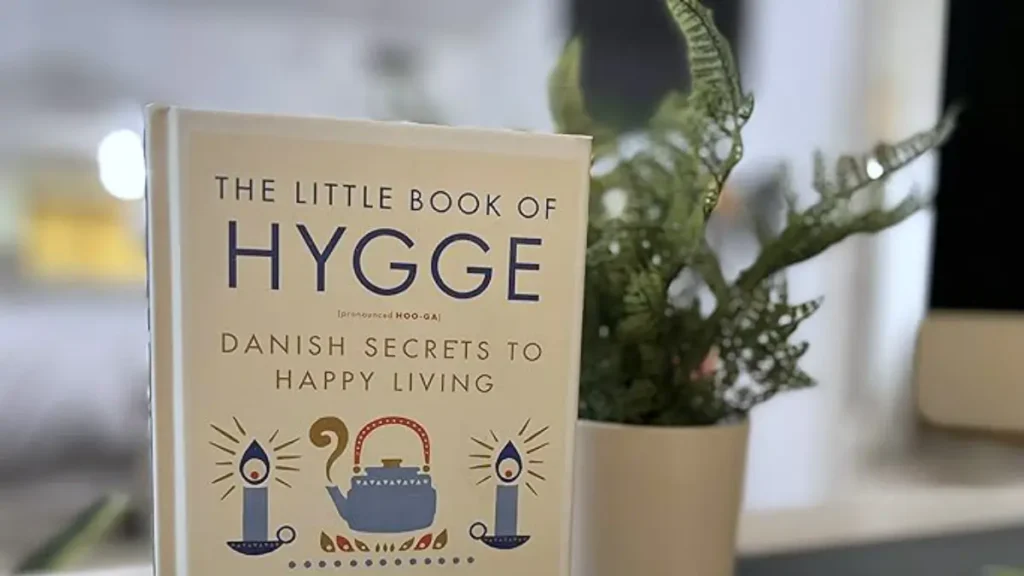
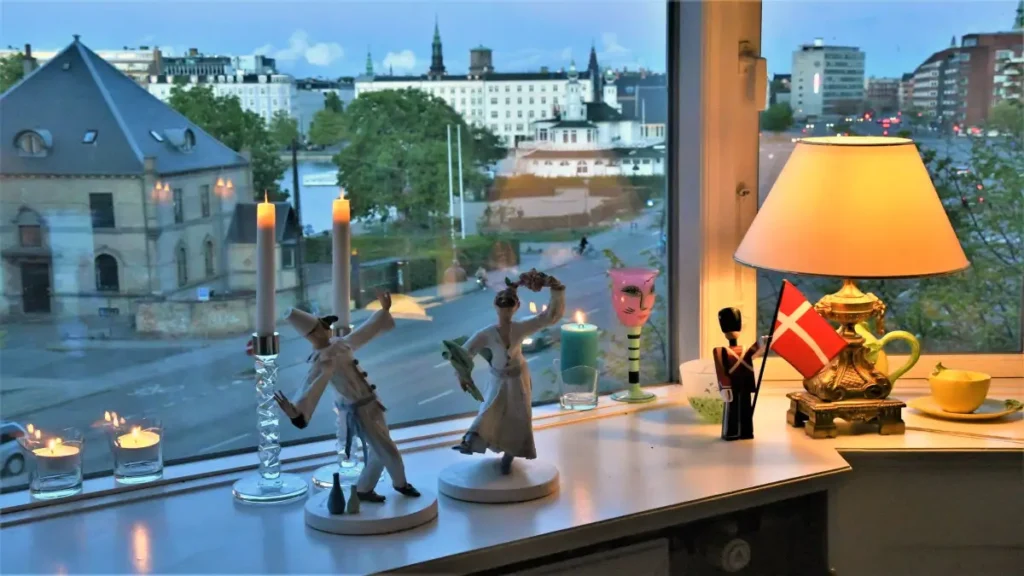
- The Vibe: Soft lighting (especially candles), warm blankets, woolen socks, and a crackling fire.
- The Social Aspect: It’s usually informal and small-scale. It's about being with close friends or family in a way that feels safe, egalitarian, and drama-free.
- The Food: Comforting treats like coffee, hot chocolate, homemade pastries (like Danish kanelsnegle), or a hearty stew.
- The Mindset: It’s a “survival strategy” for the long, dark Nordic winters, helping people find joy in staying indoors rather than feeling trapped by the weather.
Danes are the world’s top consumers of candles, and you’ll see them flickering in café windows even at midday.
Is it only Danish?
No, but the specific word “hygge” is Danish. While the concept is a cornerstone of Danish national identity, the word actually originated from an Old Norwegian word, hyggja, meaning “to comfort” or “to console.” Today, several other cultures have their own versions of this “cozy philosophy.”
Why is it so famous?
In 2016, hygge became a global lifestyle trend. While Danes have practiced it for centuries, it was marketed to the rest of the world as a “secret to happiness.” Today, you’ll find “hygge-themed” candles, books, and home decor globally, though many Danes argue that you can't actually buy hygge—it's something you experience.
Copenhagen Hygge Map
Copenhagen Hygge Spots
While Danes will tell you that true hygge happens mostly behind closed doors in private homes, you can definitely “see” and experience it in public spaces—especially in Copenhagen and the smaller historic towns.
All these specific spots are located within the city of Copenhagen. They are situated in different neighborhoods, each offering a distinct “flavor” of the town.
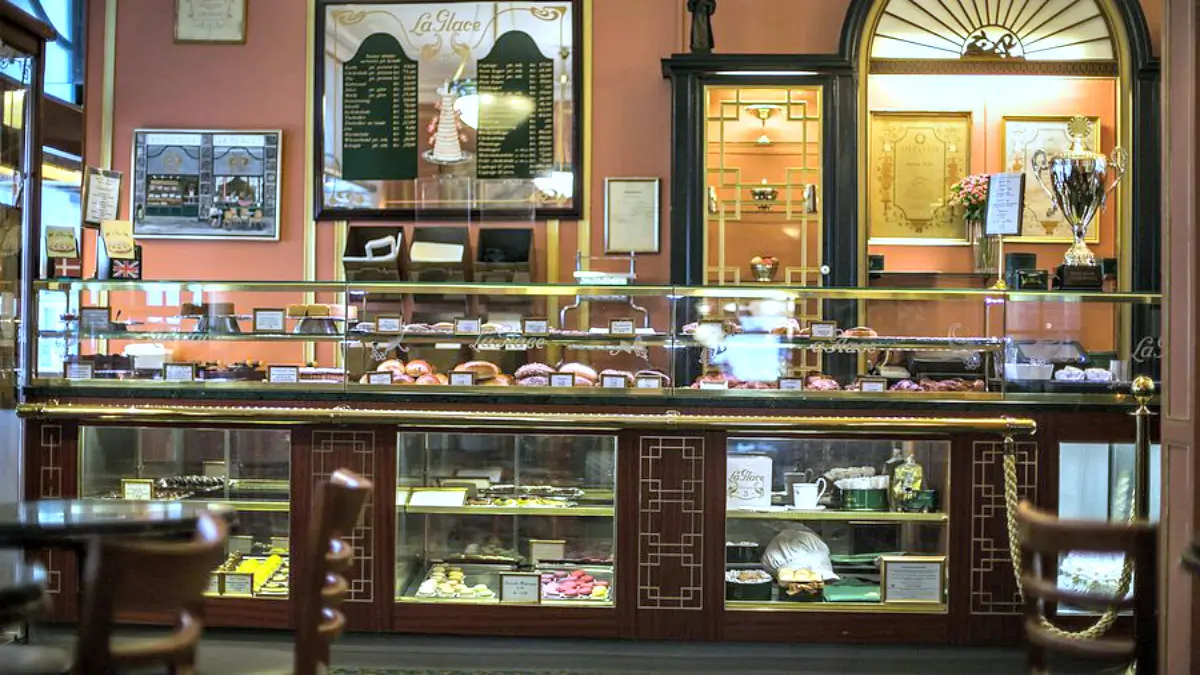
1. Conditori La Glace is situated on Skoubogade, a small side street just off the famous Strøget shopping street. It is Denmark's oldest patisserie, offering a refined and elegant atmosphere that feels like stepping back into the 19th century.
- Specializes in elaborate traditional cakes and their famous hot chocolate served with a generous side of whipped cream.
- Features historic green-toned interiors and a sophisticated environment perfect for a “fancy” hygge moment.
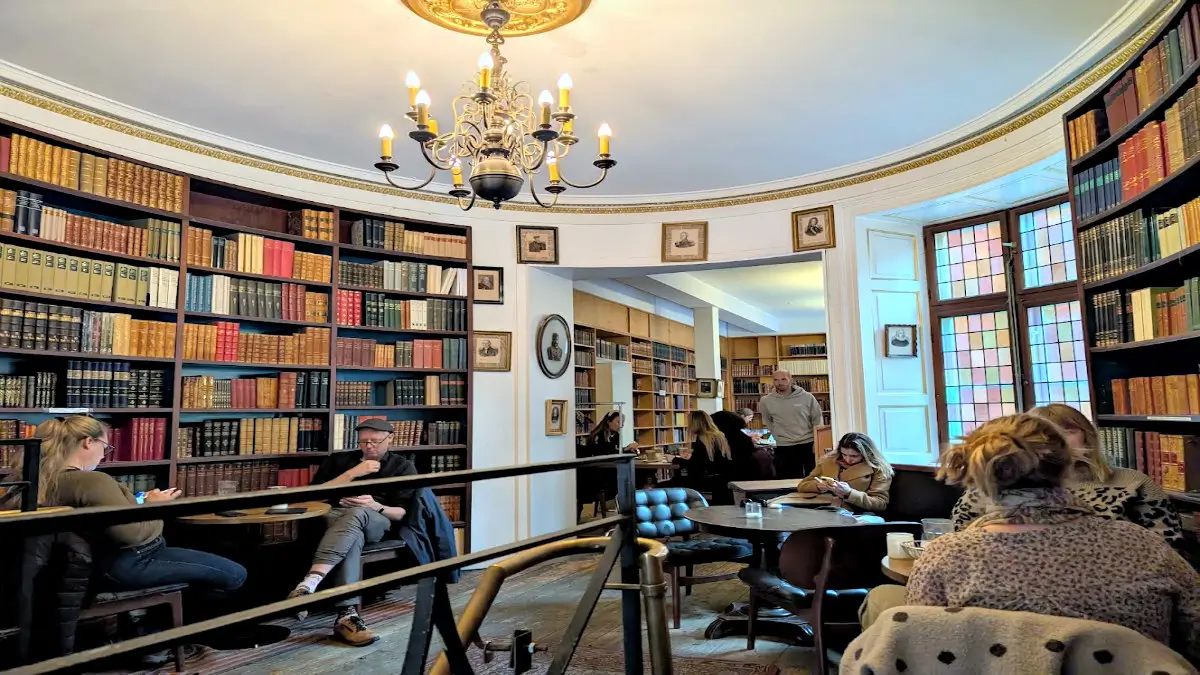
2. Paludan Bog & Café is located on Fiolstræde, right across from the University of Copenhagen. This spot is a quintessential academic haunt where the scent of old books mixes with the aroma of freshly roasted coffee.
- The interior is lined with floor-to-ceiling bookshelves, providing a quiet and studious yet warm sanctuary for visitors.
- Serves a mix of organic light meals, large brunches, and a wide variety of coffee and teas.
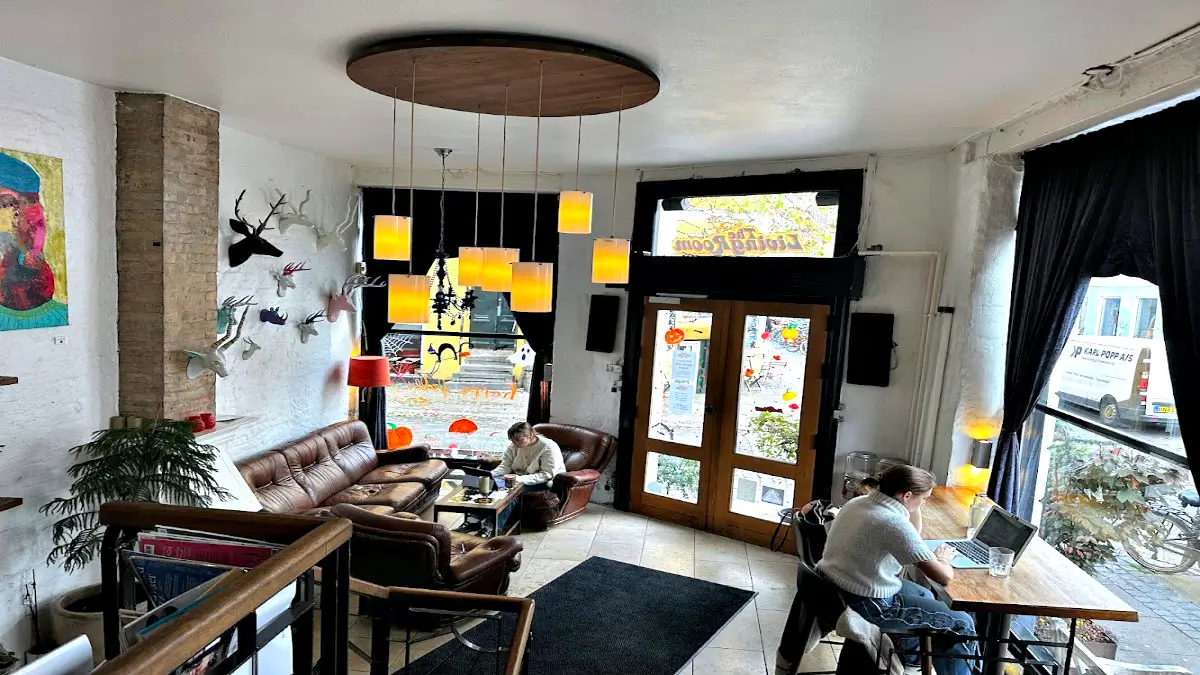
3. The Living Room can be found on Larsbjørnsstræde, in the vibrant Latin Quarter. It is a favorite local hangout known for having one of the most comfortable “hyggekrogs” (cozy nooks) in the city.
- The basement level is the main draw, featuring a wood-burning fireplace, mismatched leather chairs, and dim, warm lighting.
- Offers an organic-focused menu including smoothies, coffee, and hearty breakfast bowls.
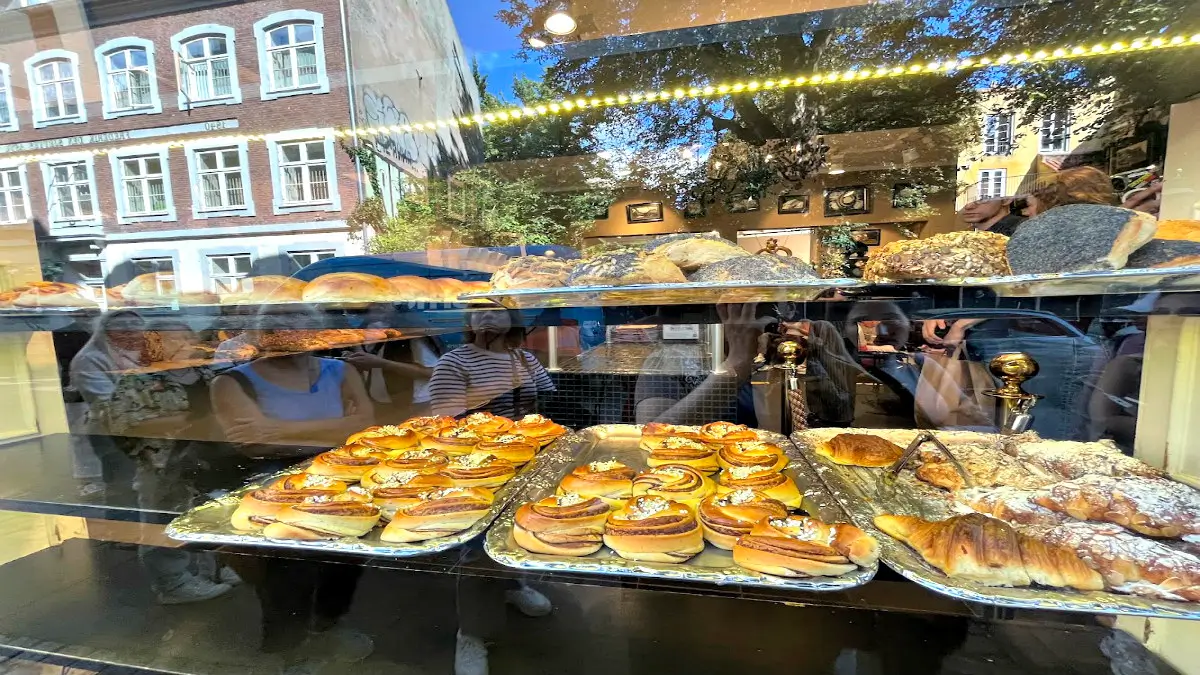
4. Skt. Peders Bageri is a legendary spot to try the quintessential Danish cinnamon roll, especially their famous “Onsdagsnegl” (Wednesday Snail).
- Known as one of the city's oldest bakeries with a long-standing tradition.
- Specializes in traditional Danish pastries and breads that are central to the kaffehygge experience
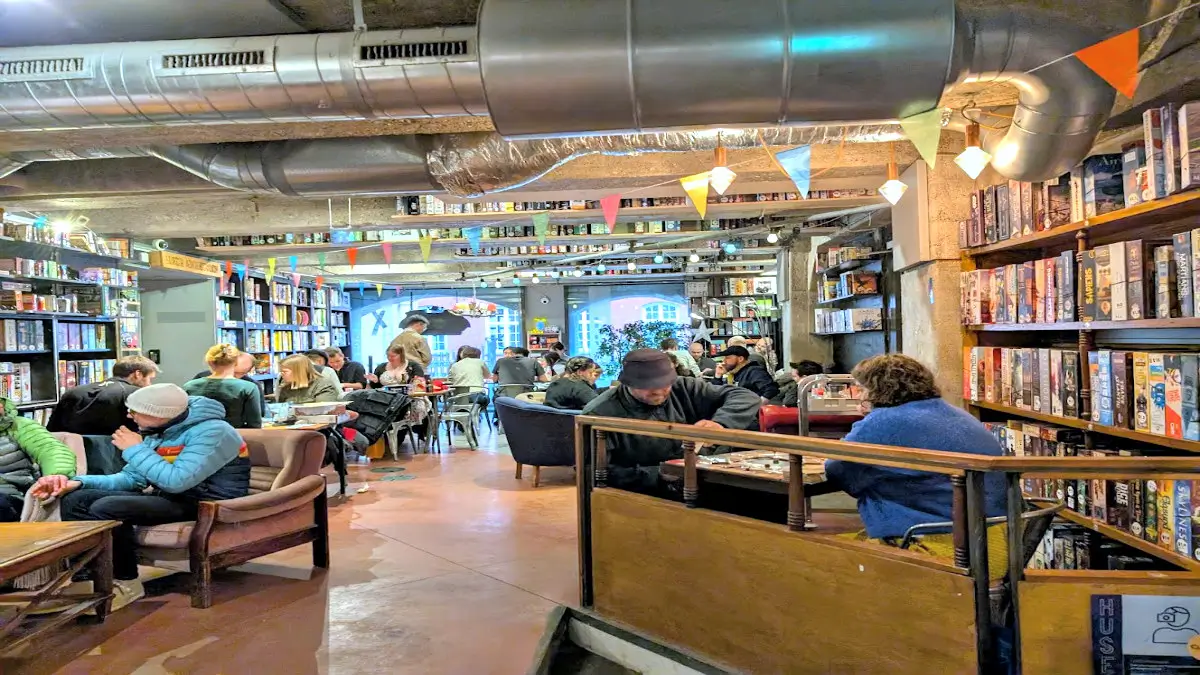
5. Bastard Café is the ultimate destination for “active hygge,” where the focus is on low-tech social bonding through games.
- Features a massive collection of board games and a lively, inclusive atmosphere.
- Offers a warm hangout space with light snacks, beer, and coffee.
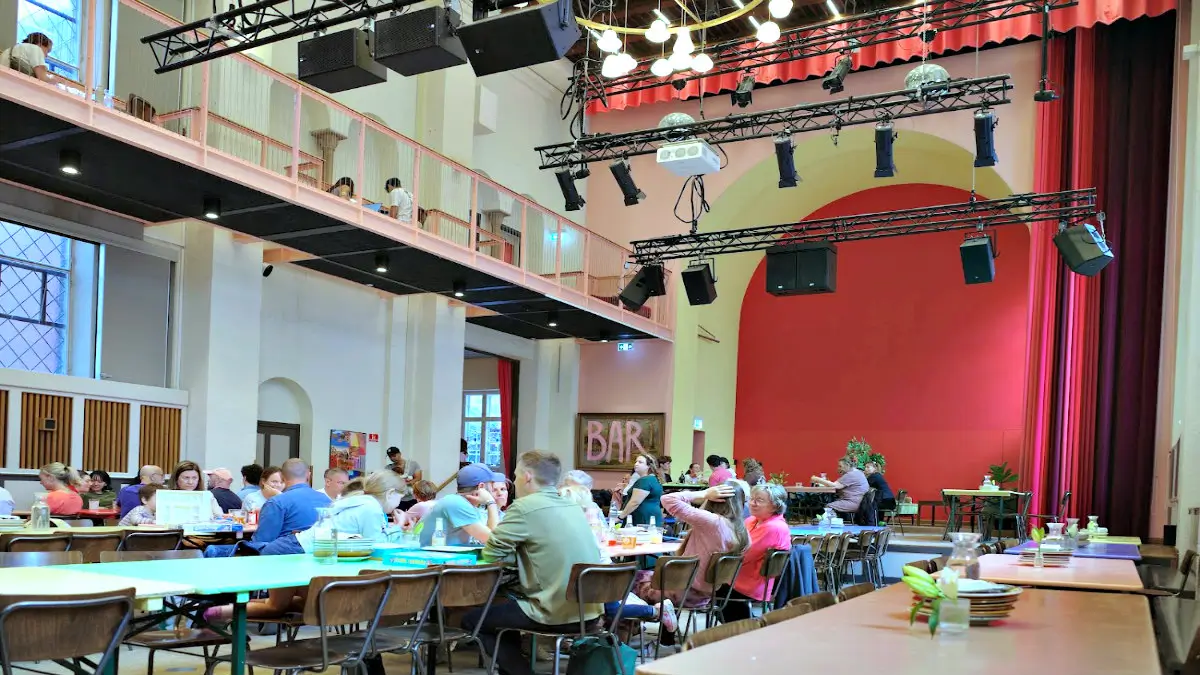
6. Folkehuset Absalon in Vesterbro offers a more modern, communal version of Danish hygge centered around togetherness.
- Hosts popular nightly community dinners (fællesspisning) where locals and visitors sit at long tables together.
- Serves as a vibrant cultural hub with events ranging from bingo to dance classes.
What is Hyggekrog?
A hyggekrog (literally “the hygge corner”) is a dedicated, cozy nook (angolo) in a home designed for relaxation and “me-time.”
While hygge usually describes a social atmosphere, the hyggekrog is the physical space where you retreat to enjoy life's quietest pleasures. Most Danish homes have one, and they are considered essential for getting through the long, dark winters.
The Anatomy of a Hyggekrog
To be a true hyggekrog, the space generally needs a few specific elements:
- The Location: It is almost always in a corner or a confined space. The most classic version is a wide windowsill padded with cushions, but it can also be a comfortable armchair tucked away from the main traffic of the house.
- The Textiles: You cannot have a hyggekrog without a “mountain” of soft things. This typically includes a thick wool throw or sheepskin rug, and several mismatched, plush pillows.
- The Lighting: Overhead lights are forbidden here. A hyggekrog is lit by a small, warm-toned lamp or, most authentically, a couple of candles on a nearby side table or the windowsill.
- The “Supplies” section is for a specific activity. You’ll usually see a small stack of books, a wooden tray for a cup of tea or coffee, and perhaps a view of the outside world.
Why do Danes love them?
The concept is rooted in the idea of “shelter.” Sitting in a hyggekrog makes you feel psychologically safe and shielded from the world. It’s a “den” for adults—a place where you have permission to do nothing but be present and comfortable.
How to spot one in Denmark?
- Residential Windows: As you walk through neighborhoods like Christianshavn in Copenhagen, you'll see many street-level windows designed specifically as seats, lit by a single candle.
- Cafés: Look for the table in the very back corner with the most pillows—that's the “hyggekrog” of the shop.
- Hotels: Many boutique hotels in Denmark will have a built-in reading nook in the room rather than just a standard desk.
Copenhagen Hygge Districts
Here are the most significant Copenhagen hygge districts for “real hygge”, with the vibe, plus what to do there:
Indre By (City Centre) + Latin Quarter
Copenhagen’s historic heart: pretty streets, easy walking, and lots of classic “cozy café + cobblestone stroll” moments—great for first-timers who want hygge without commuting. This is where places like Paludan Bogcafé and nearby old-town lanes fit perfectly. Guide to the city center!
Nyhavn isn’t a separate “district” like Vesterbro or Nørrebro—it’s a postcard-perfect canal area within Indre By. For hygge, the trick is timing: come early morning for calm water and soft light, or golden hour when the colorful façades glow and the waterfront feels like a movie set. It’s less about “checking it off” and more about doing it slowly: a relaxed stroll along the canal, a warm drink nearby, and a quick detour into the surrounding old-town streets.
Christianshavn
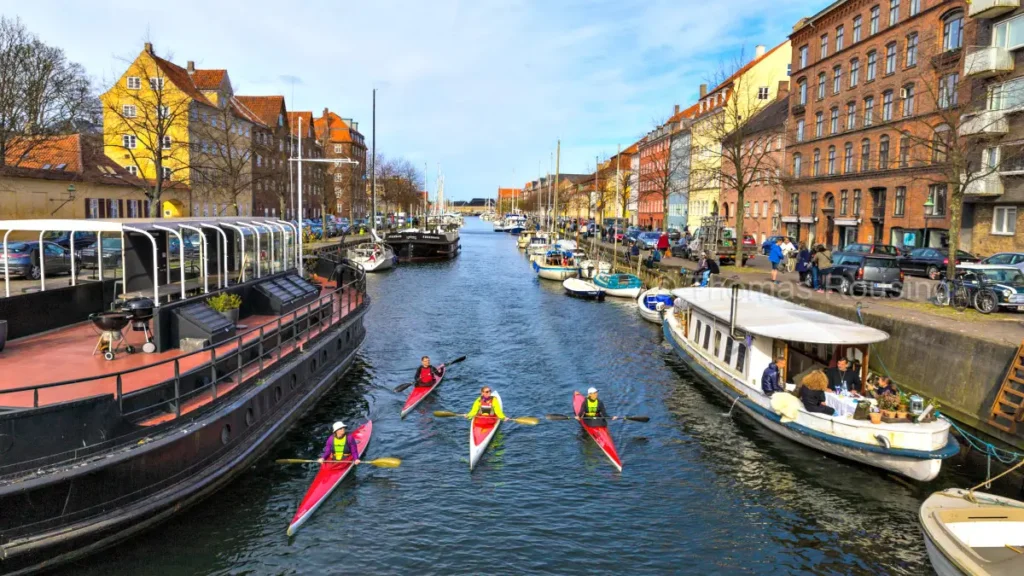
Canals, colorful houses, and a calmer “maritime village inside the city” feel. It’s one of the easiest areas to sell as fairytale hygge—best explored on foot along the quays (or from the water)
Christianshavn is often described as the most atmospheric neighborhood in Copenhagen. Founded in the early 1600s by King Christian IV, it was inspired by the canals of Amsterdam and originally built as a merchant town and naval base.
Today, it is a “city within a city” that balances high-end gastronomy with a gritty, bohemian soul. Here is how to experience it:
1. The Canals & Houseboats – Unlike the famous Nyhavn (which is very “clean” and tourist-focused), the canals in Christianshavn feel lived-in.
- The Vibe: You’ll see colorful 17th-century warehouses, but you’ll also see people living on houseboats with laundry drying on deck and flower pots lining the wooden hulls.
- Local Tradition: On warm evenings, it is a local tradition to buy a beer or coffee from a nearby kiosk and sit with your legs dangling over the channel edge at Overgaden oven Vandet.
2. Our Saviour’s Church (Vor Frelsers Kirke) – This is the neighborhood’s most iconic landmark. It is famous for its external spiral staircase that winds all the way to the top of the spire.
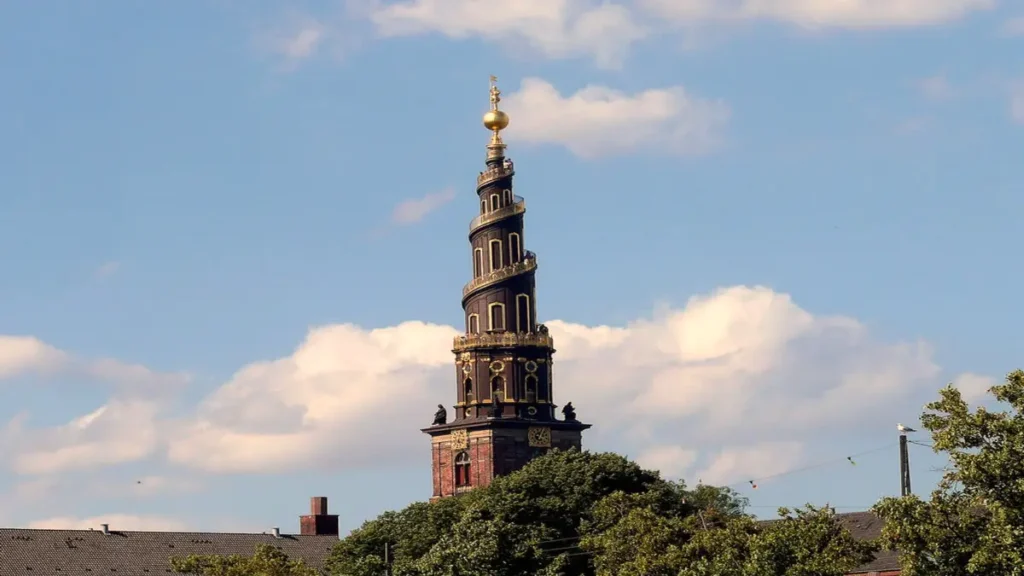
- The Climb: There are 400 steps in total; the last 150 are on the outside.
- The View: It offers arguably the best 360-degree view of Copenhagen. On a clear day, you can see across the water to Sweden.
- Hygge Note: Inside, the church is beautiful and hushed, featuring a massive, ornate pipe organ supported by two carved wooden elephants.
3. Freetown Christiania – Tucked inside Christianshavn is Christiania, a self-governing “freetown” established by hippies in 1971 in abandoned military barracks.
- The Environment: It is entirely car-free. You’ll find hand-built, eccentric houses, vibrant street art, and communal workshops.
- The Ethics: It is a social experiment centered on recycling and community living.
- Important: While it is a major tourist attraction, it is a residential area. There are areas (like Pusher Street) where photography is strictly prohibited.
4. Culinary Hygge – Christianshavn is a foodie paradise, ranging from world-class dining to cozy community spots.
- Kanalhuset: A great place to experience fællesspisning (community dining), where you sit at long tables and share a meal with strangers.
- Café Over Gaden: A classic spot for people-watching by the water.
- Fine Dining: The neighborhood is also home to Restaurant Barr (located in the original Noma building) and several Michelin-starred spots if you’re looking for a “high-end hygge” experience.
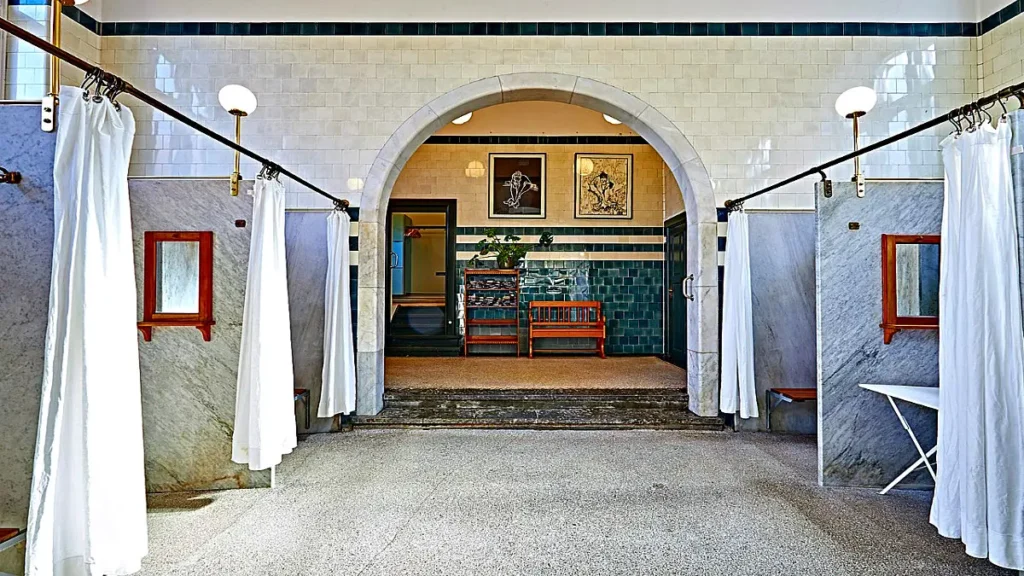
5. Sofiebadet – For a different kind of relaxation, visit this historic bathhouse. It’s an architectural gem from the early 20th century that still functions as a hammam and sauna. It is the ultimate “slow travel” experience in the heart of the city.
Vesterbro
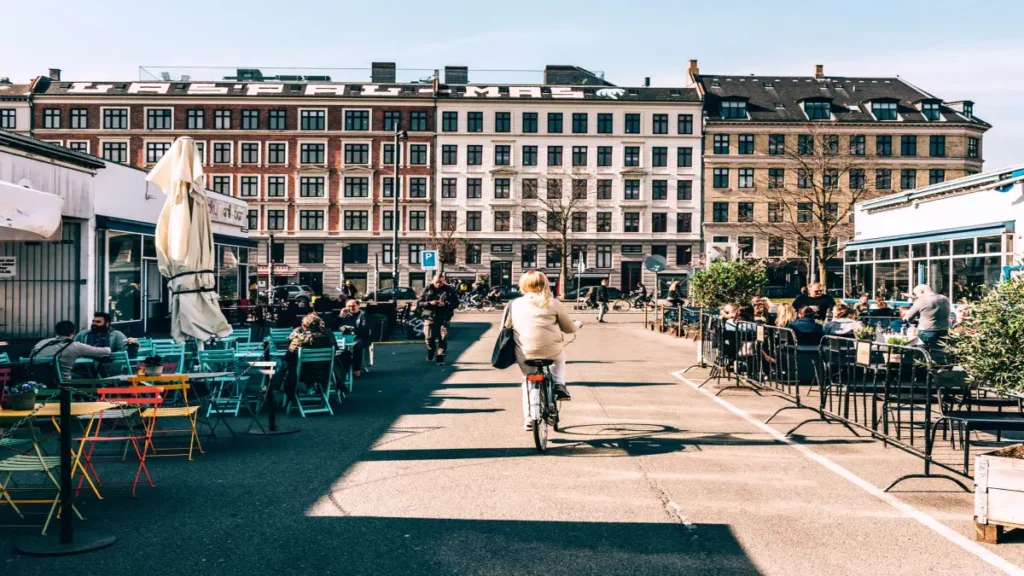
The “cool + local” district: lively streets, independent shops, and some of the city’s best bars and restaurants—hygge here is more warm + social than quiet. Folkehuset Absalon sits right in this vibe (communal dinner = instant togetherness).
Nørrebro
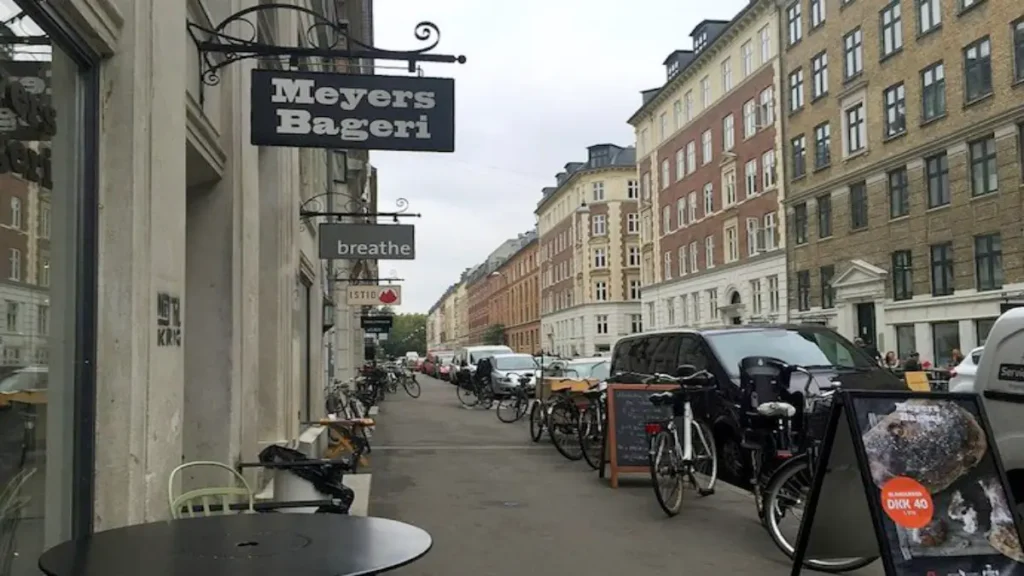
Multicultural, creative, and buzzing—hygge here is cafés, small shops, street life, and finding your own favorite corner. Great for recommending “do Copenhagen like a local,” especially around iconic streets like Jægersborggade.
Frederiksberg
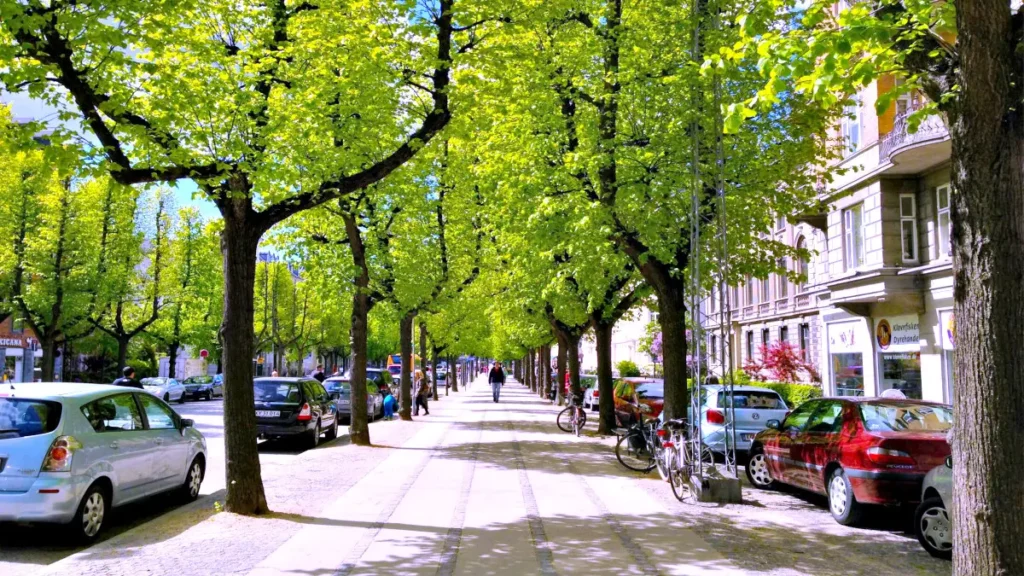
A “city within the city” with tree-lined boulevards, parks, and a calm, confident feel—perfect for slower hygge (strolls, bakery stops, green spaces). It’s also an easy way to add a more elegant side to your Denmark hygge narrative.
Østerbro
Quiet, green, and very livable: parks + waterfront + cafés, with a family-friendly, laid-back atmosphere. If you want to show hygge as “everyday Denmark,” Østerbro is a strong example.
Denmark castles
All Copenhagen Castle & Palace Tours
Want the easiest way to pick a castle day? Browse the best Copenhagen castle & palace tours—entry tickets, guided visits, and day trips (perfect if you’re short on time).
Denmark does castles really well — from royal palaces in the heart of Copenhagen to seaside fortresses and fairytale manors surrounded by forests and lakes. The best part is how easy they are to fit into a short trip: you can visit Rosenborg in an hour or two, make Kronborg a simple day trip by train, or go bigger with moated gems like Egeskov and countryside classics like Dragsholm.
Use the list and Denmark castles map below to pick the vibe you want (royal history, dramatic views, or pure storybook scenery) and plan your route around it.
Rosenborg Castle (Rosenborg Slot)
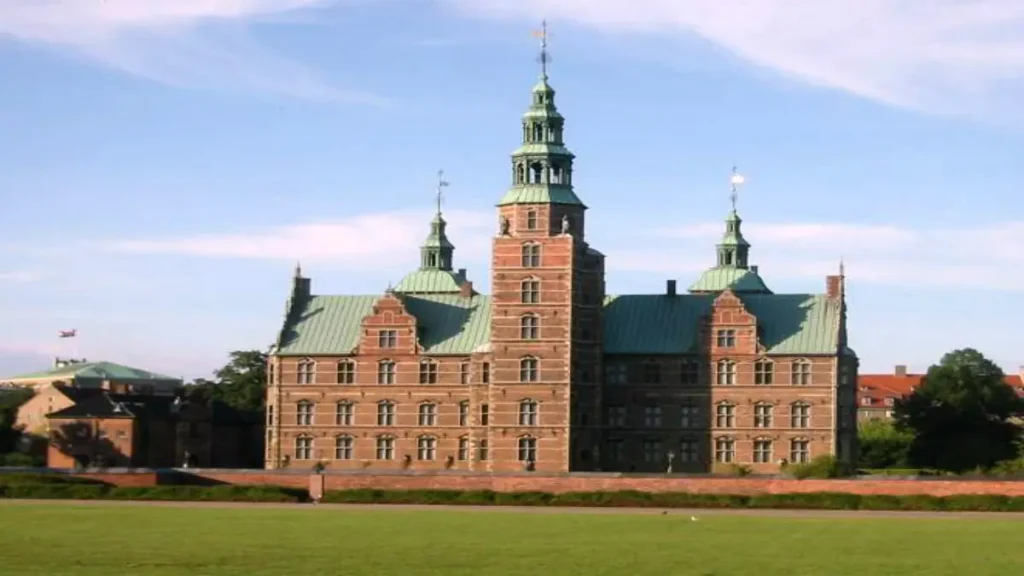
Where: Central Copenhagen, inside Kongens Have (The King’s Garden). Entrance at Øster Voldgade 4A.
Why it’s worth it: Crown Jewels + royal interiors — this is one of the most “iconic Copenhagen” castle visits.
How to reach:
- Public transport: ~200 meters from Nørreport Station (metro + trains + buses hub).
- Walking/biking also makes total sense because it’s right in the center.
Organized tours:
Easy to book tickets + tours (including entry tickets and guided options) on the platform.
Copenhagen: Rosenborg Castle Entry Ticket
Step into one of Copenhagen’s most iconic royal castles—perfect for a hygge day in the city center. Quick, easy booking with mobile tickets.
Kronborg Castle (Kronborg Slot) — Helsingør (Elsinore)
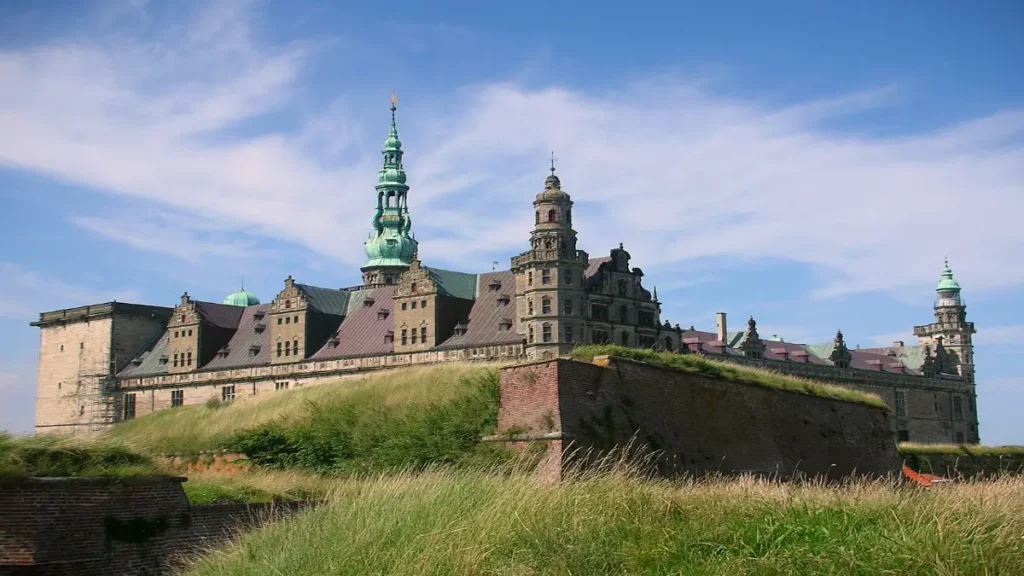
Where: Helsingør, on the coast north of Copenhagen (Hamlet’s castle).
Why it’s worth it: UNESCO-ish “big castle energy,” sea views, and the Hamlet connection.
How to reach:
- Train: Take the Coastal Railway (DSB) to Elsinore Station; trains run about every 20 minutes, then it’s a ~10-minute walk to the castle.
Organized tours:
- Tons of day tours from Copenhagen that include Kronborg (often paired with other North Zealand sights).
Copenhagen: Kronborg, Frederiksborg Castle & Roskilde Tour
A classic “best-of” day trip from Copenhagen: Hamlet’s Kronborg, the fairytale grandeur of Frederiksborg, and historic Roskilde—easy, guided, and stress-free.
Frederiksberg Palace (Frederiksberg Slot) — Copenhagen
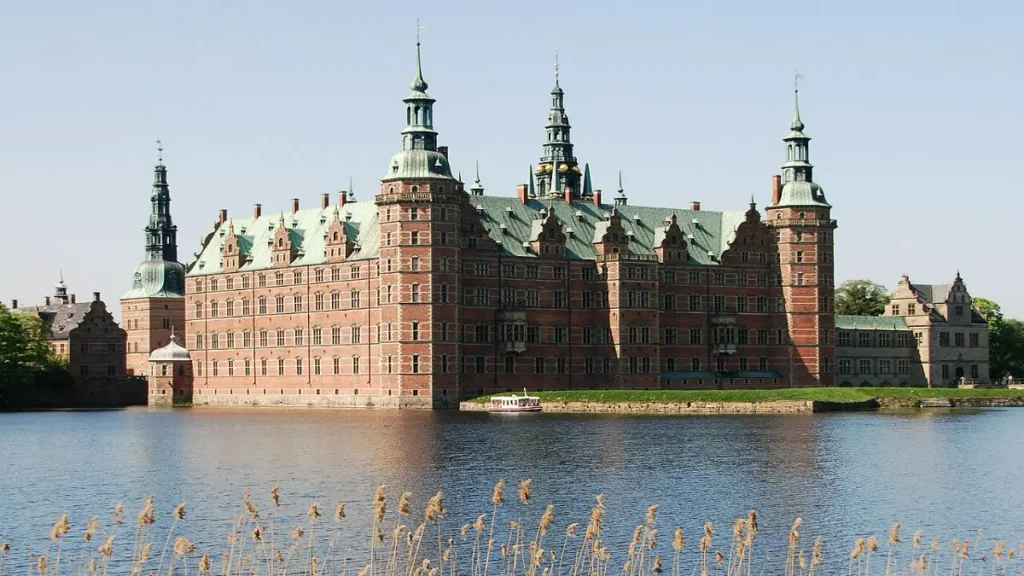
Where: Frederiksberg Gardens, Copenhagen (Frederiksberg area).
Important note: This one is not generally open to the public because it’s used by the Royal Danish Defence College, but there are guided tours on the last Saturday of each month. More info you can find here!
How to reach:
- It’s in the city, so it’s typically easy by metro/bus/bike (the gardens area is the main target).
Organized tours
- More limited than Rosenborg/Kronborg. The main “organized” option is those scheduled guided tours rather than daily entry.
Copenhagen Bike Tours
See Copenhagen the local way: easy cycling, hidden lanes, waterfront views, and plenty of photo stops. Perfect for an “active hygge” day—especially in spring and summer.
Dragsholm Castle (Dragsholm Slot) — Odsherred (West Zealand)
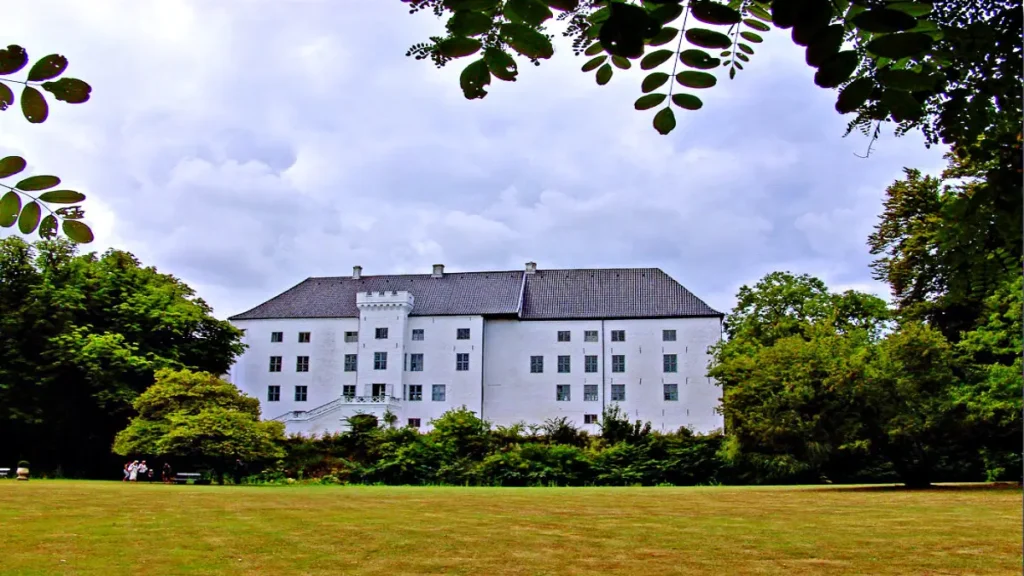
Where: Dragsholm Allé, 4534 Hørve (Odsherred peninsula).
Why it’s worth it: Historic castle + strong “countryside Denmark” vibe (and it’s also known as a hotel/restaurant destination).
How to reach:
- Drive: Around 1h 6m from Copenhagen (most convenient).
- Public transport: Possible but longer (train connections + local legs).
Organized tours:
- The castle offers guided tours/activities on-site (good if you reach it independently). More info you can find here!
- From Copenhagen, this is more commonly done by self-drive (or private transfer) rather than frequent big-group tours.
Egeskov Castle (Egeskov Slot) — Funen (near Odense)
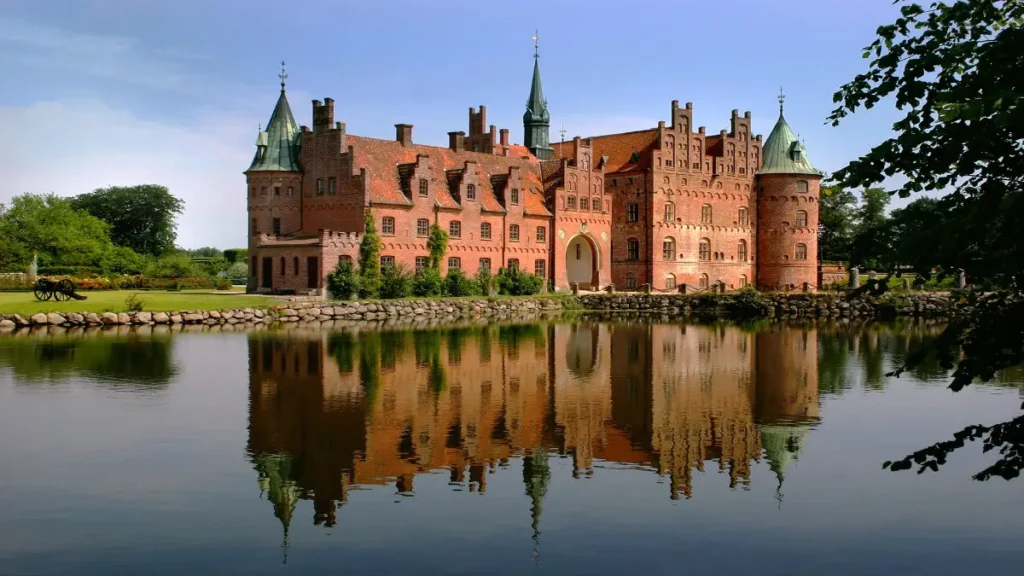
Where: Near Kværndrup on Funen (Fyn), easy to combine with an Odense day.
Why it’s worth it: Fairytale moat castle + big gardens/exhibitions.
How to reach (without a car):
- Use GoCollective to Kværndrup Station, then:
- Take bus 920 to the stop “Egeskov Gade” (it stops right by the entrance), or
- Walk ~2.5 km (they note it’s along a busy road).
Organized tours:
- You can book guided tours of the castle/gardens/exhibitions via their official guide-service setup.
- From Copenhagen, you’ll see some private day-trip style options to combine Odense + Egeskov (less common as a standard group tour).
FAQs
Where can I experience Denmark hygge in Copenhagen?
Start with cozy “living room” spots like The Living Room, Paludan Bogcafé, La Glace, Folkehuset Absalon (communal dinner), Skt. Peders Bageri, and Bastard Café for board-game hygge. Pair them with an evening stroll for peak cozy vibes.
Is hygge only a winter thing?
Not at all. Winter hygge is famous (candles, gløgg, markets), but summer hygge is real too—think harbor baths, picnic walks, and GoBoats on the canals. It’s more about the mood than the season.
What’s the best neighborhood for “fairytale Copenhagen” vibes?
For instant postcard energy, go to Nyhavn—especially early morning or golden hour. For quieter, older-street charm, add Magstræde (and nearby streets) for cobblestones, historic façades, and calm photo-friendly corners.
Is Tivoli Gardens worth it for hygge?

Yes—Tivoli is one of the easiest places to feel “storybook Denmark,” especially after dark when the lights come on. In winter, it becomes extra magical with seasonal décor, treats, and that cozy festive buzz.
What is “active hygge” and what are the best examples?
Active hygge is cozy—but with movement. In Copenhagen, that can mean a dip at the harbor baths, a canal ride on GoBoats, or a long walk with a pastry stop. It’s still slow and enjoyable, just not strictly indoors.
Where should I go for a real Danish fairytale day trip (or overnight)?
For pure storybook calm, choose Ærø and its main town, Ærøskøbing—cobblestones, colorful houses, and a “slow island” feel. If you prefer history and city energy, head to Aarhus for Den Gamle By (The Old Town).