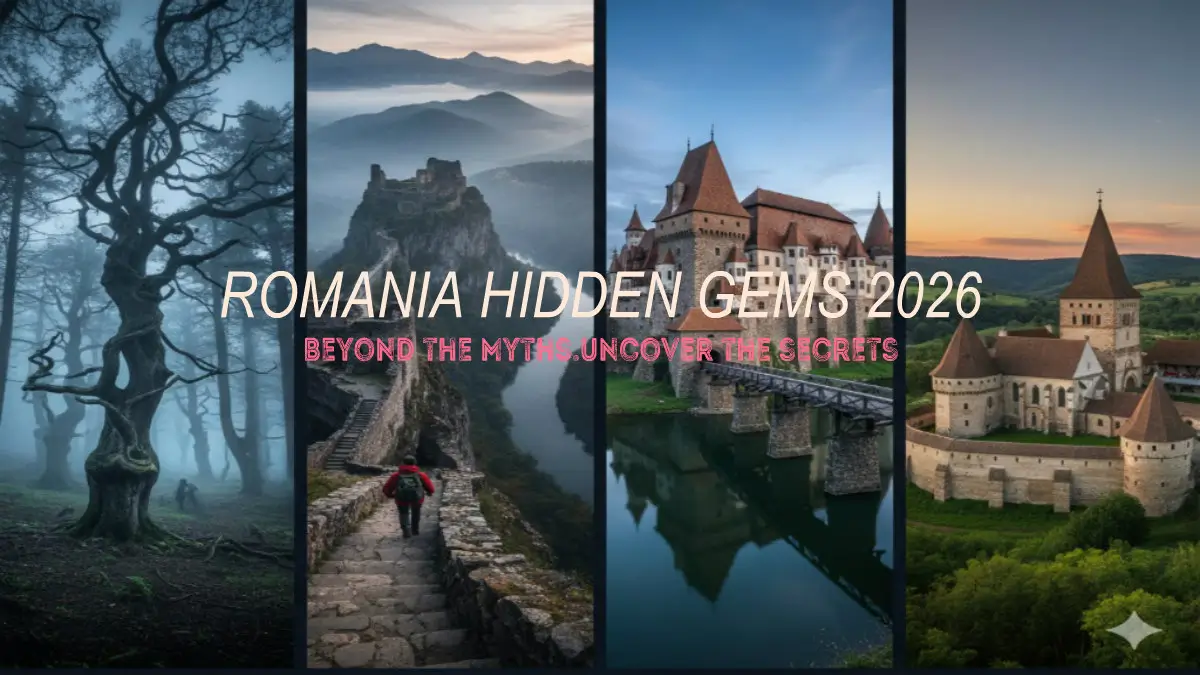
Romania Hidden Gems 2026: Beyond the Dracula Myths
The world knows Transylvania for its castles and coffins, but the real magic of Romania lies in the shadows cast by the famous legends. Among Romania hidden gems 2026, travel is moving away from the crowded “tourist traps” toward something more raw, authentic, and unexplained.
If you are looking to walk in the actual footsteps of Vlad the Impaler—or perhaps catch a glimpse of something that science can't quite explain—this is your guide to the hidden gems of Romania that the guidebooks often overlook.
🏛️ The Dracula Trail: Icons vs. Romania Hidden Gems
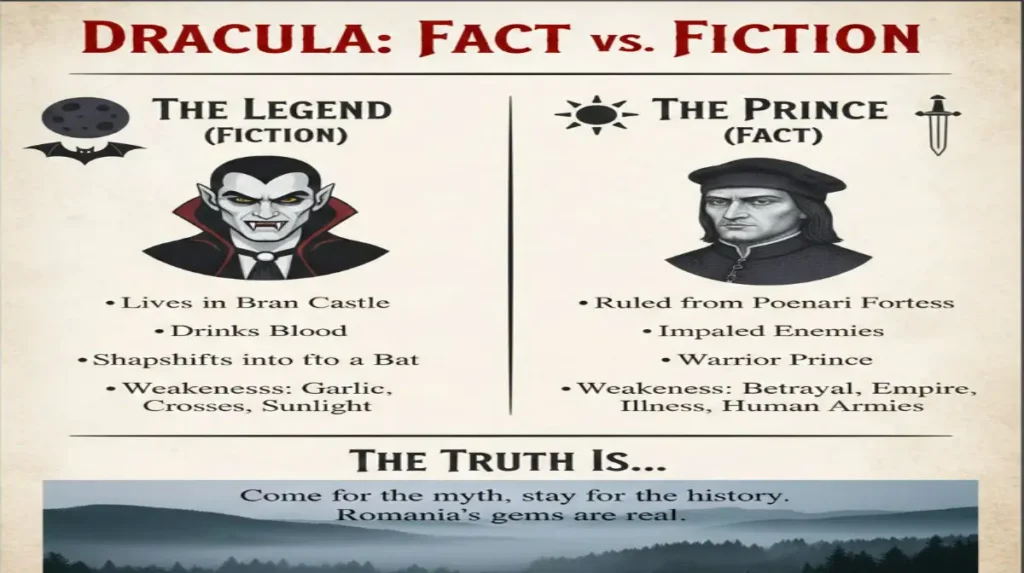
Before I dive into the itinerary, let’s clear up the mystery. There is a difference between the Legendary Icons (the spots you see on postcards) and the Hidden Realities (the spots where history actually happened).
| The Famous Icons (The Legend) | The Truly Hidden Gems (The Reality) |
| Bran Castle: The visual “Vampire's Lair” | Poenari Fortress: Vlad the Impaler's actual stronghold |
| Sighișoara: The colorful birthplace | Târgoviște: Where the Prince truly ruled |
| Peles Castle: The Royal summer home | Bran Castle: The visual “Vampire's Lair.” |
🗺️ Romania Hidden Gems 2026 “Dracula’s Footsteps” Itinerary
To get the most out of your trip, I recommend this one-week loop. It pairs one famous icon with one secret spot every day.
- Day 1: Bucharest & Snagov – Start in the capital, then head 40 mins north to the island tomb.
- Day 2: The Fortress Climb – Drive the Transfăgărășan to reach the 1,480 steps of Poenari Fortress.
- Day 3: The Gothic Heart – Visit Sibiu’s “Eyes” and the massive Corvin Castle.
- Day 4: The Paranormal Pivot – Explore the Turda Salt Mine and the haunted Hoia-Baciu Forest.
- Day 5: Medieval Secrets – The Sighișoara Citadel and the fortified church of Biertan.
- Day 6: The Famous Spires – Morning at Bran Castle, followed by a sunset at the Witches’ Pond.
- Day 7: Royal Farewells – The Neo-Renaissance beauty of Peleș Castle in Sinaia.
The “Spooky Scale”: Choose Your Adventure
Not all hauntings are created equal. Use my “Bat Rating” to choose your level of thrill.
🔍 Rating the Haunts
In this hidden gems of Romania guide, I’ve used a Bat Scale (🦇) to rank each location's atmosphere. While some spots are famous for their beauty, others are famous for things we can’t quite explain.
- 1-2 Bats: Historically Haunting. Fascinating stories without the jump scares.
- 3-4 Bats: Folklore & Frights. Deeply rooted in local myths, best visited with a friend!
- 5 Bats: The Legend’s Core. These are the most intense sites in Romania. Enter at your own risk.
📍 Snagov Monastery: The Island Tomb
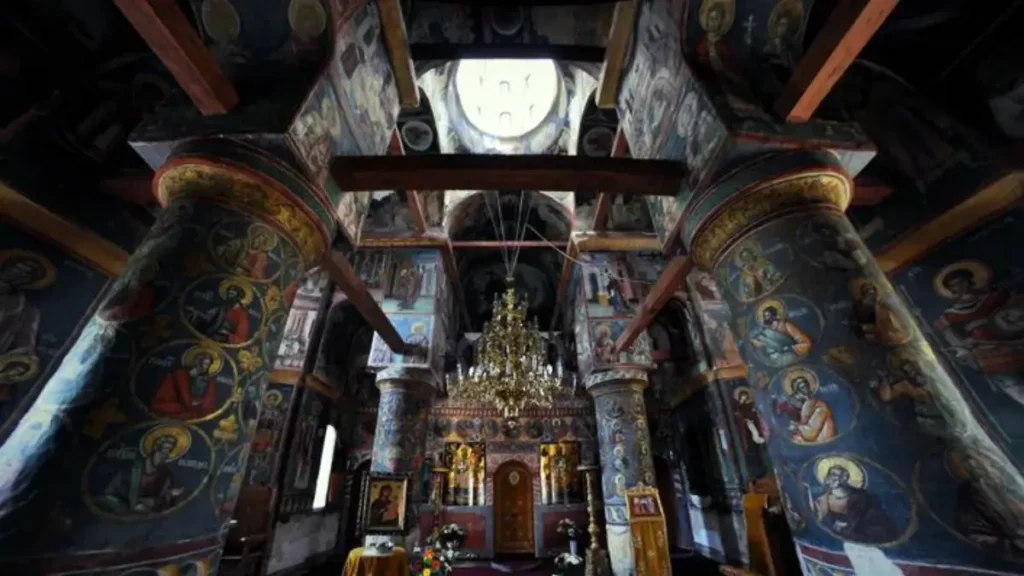
Spooky Rating: 🦇🦇 (Solemn Mystery)
Just 40 minutes north of Bucharest lies Snagov Monastery, a quiet, water-locked sanctuary hidden on a tiny island. While the setting is peaceful, the air here is thick with a solemn, centuries-old mystery.
This is the alleged final resting place of Vlad the Impaler. Inside the stone church, a simple plaque on the floor marks the spot where the Prince was reportedly buried after his decapitation.
The Hidden Spook: Locals claim that on stormy nights, you can hear the chime of a “ghost church” rising from the bottom of the lake—a previous monastery that allegedly sank into the depths centuries ago.
Unlike the more intense spots on this list, Snagov offers a “lite” spookiness that is more about lonely history than active hauntings.
- Access: You no longer need to find a local with a rowboat! A modern footbridge now connects the village to the island.
- Insider Tip: Respect the dress code (shoulders and knees covered), as this is still an active place of worship for the local monks.
📍 Iulia Hasdeu Castle: The Spiritism Temple
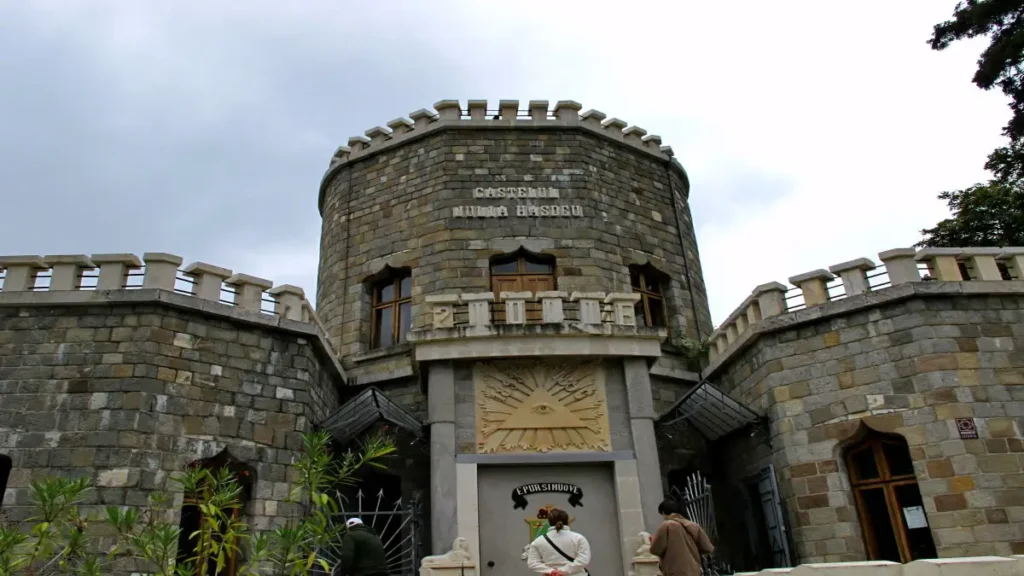
Spooky Rating: 🦇🦇🦇 (Gothic Melancholy)
In the town of Câmpina stands perhaps the most bizarre building in Romania. This isn't a medieval fortress, but a “telephone to the afterlife” built by the grieving scholar B.P. Hasdeu after the tragic death of his genius daughter, Iulia.
The Spook Factor: The entire architecture of the castle was dictated by Iulia… from beyond the grave. Hasdeu claimed she sent him the blueprints during spiritism séances. Inside, you’ll find stone chairs built specifically for spirits and a “spirit door”—a hole in the wall designed so Iulia’s ghost could move between rooms without opening a latch.
- Access: Easily reachable by car from Bucharest (DN1) or by train to Câmpina.
- Insider Tip: Look for Iulia’s piano. Legend has it that in the silence of the museum, the keys sometimes move on their own, playing her favorite songs.
📍 Witches’ Pond (Balta Vrăjitoarelor): The Portal in the Woods
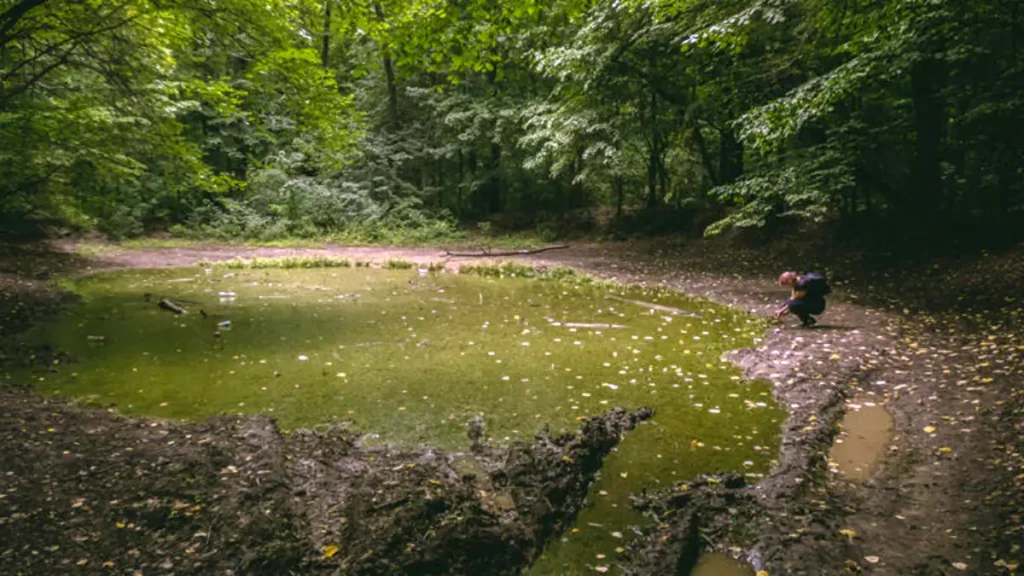
Spooky Rating: 🦇🦇🦇🦇 (Primal Fear)
Hidden deep within the Boldu-Crețeasca Forest near Bucharest, this small, unassuming pond is where folklore meets pure terror. Legend says this is the exact site where Vlad the Impaler was ambushed and decapitated, and that the land has been “different” ever since.
The Spook Factor: It is said that the pond never dries up, never freezes, and has no measurable bottom. Animals refuse to drink from its waters, and locals avoid the area after dark. Even today, modern-day “witches” gather here on June 24th (the Sânziene festival) to perform ancient rituals, claiming the pond is a gateway to another dimension.
- Access: You will need a private car; the pond is not marked on standard tourist maps.
- Insider Tip: Wear mud-resistant boots. The forest is dense, and it is incredibly easy to lose your bearings once the sun starts to dip.
📍 Hoia-Baciu Forest: The Bermuda Triangle of Transylvania
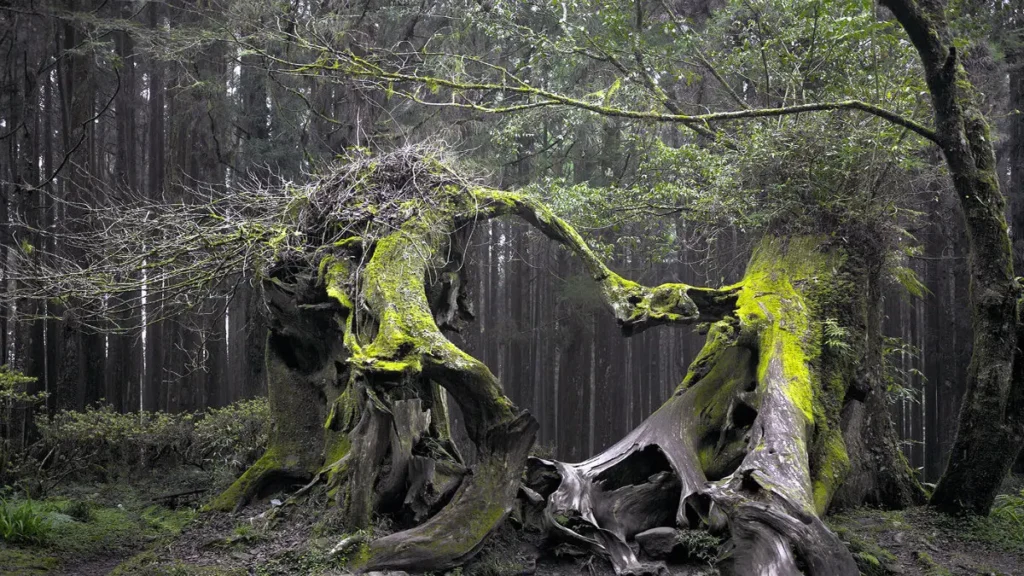
Spooky Rating: 🦇🦇🦇🦇🦇 (Paranormal Peak)
If Snagov is about solemn history, Hoia-Baciu is where reality begins to bend. Located just outside Cluj-Napoca, this forest is world-famous for unexplained phenomena—from UFO sightings to electronic devices that drain to 0% the moment you step under the canopy.
The Spook Factor: Visitors often report intense feelings of anxiety, nausea, and the persistent sensation of being watched from behind the contorted, spiral-shaped trees. The heart of the forest is “The Round Clearing,” a spot where no vegetation grows and where compasses are known to malfunction.
- Access: A 15-minute drive from Cluj-Napoca via car or ride-share.
- Insider Tip: Don’t rely on Google Maps alone; GPS signals are famous for disappearing exactly when you need them. Book a guided night tour for the full (and safe) experience.
Think you can handle the “Round Clearing” after dark? > 🌕 Book Your Hoia-Baciu Night Tour Here.
❓ Frequently Asked Questions
Is Poenari Fortress open in 2026?
Yes! After extensive restoration to secure the cliffside stairs, the fortress is fully open. Be prepared for a workout—it’s 1,480 steps to the top!
Do I need cash for these locations?
While major cities accept cards, many hidden gems like Iulia Hasdeu or local parking areas require Romanian Leu (RON). Always keep small bills on hand.
What is the best time to visit?
For Romania hidden gems, late October offers the best autumn foliage, but June 24th is the best time for folklore fans to visit the Witches' Pond.
Is it safe to visit the Hoia-Baciu Forest at night?
While the forest has a reputation for paranormal activity, it is physically safe for travelers. However, because the trails are poorly marked and the terrain is uneven, we strongly recommend booking a guided night tour rather than wandering alone. Most tours depart from Cluj-Napoca.
Romania is a land where every stone has a story, and every forest holds a secret. Whether you're chasing the ghost of a prince or the thrill of the unknown, these hidden gems offer an experience you won't find in any guidebook.
Now, I want to hear from you. Which would you choose: a night in a haunted forest or a climb to a clifftop fortress? Let me know in the comments below!
The Dark Side of Romania: 3 Dracula Horror Classics
Here are 3 solid horror-first picks with strong Dracula/Transylvania vibes:
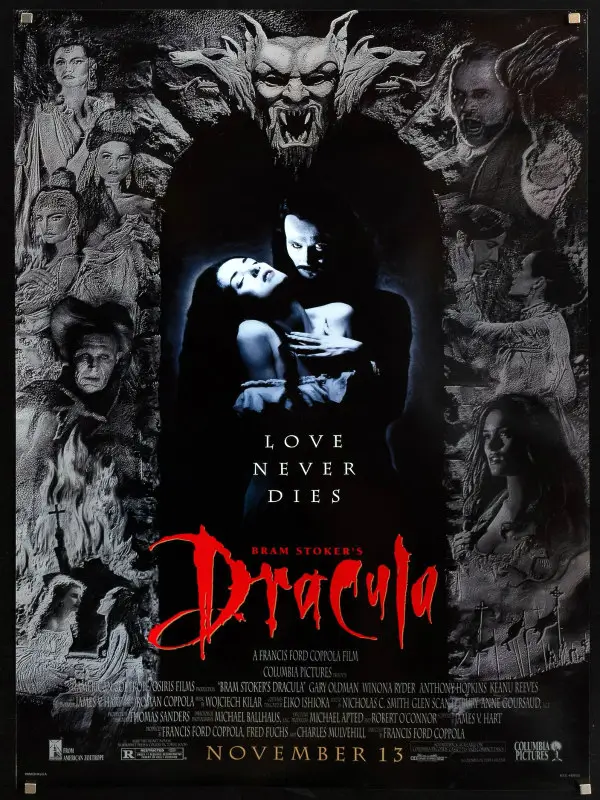
- Bram Stoker's Dracula (1992). The most “gothic horror + romance”– themed mainstream version, with an explicit Vlad-inspired backstory, a creepy castle atmosphere, and some genuinely unsettling scenes.
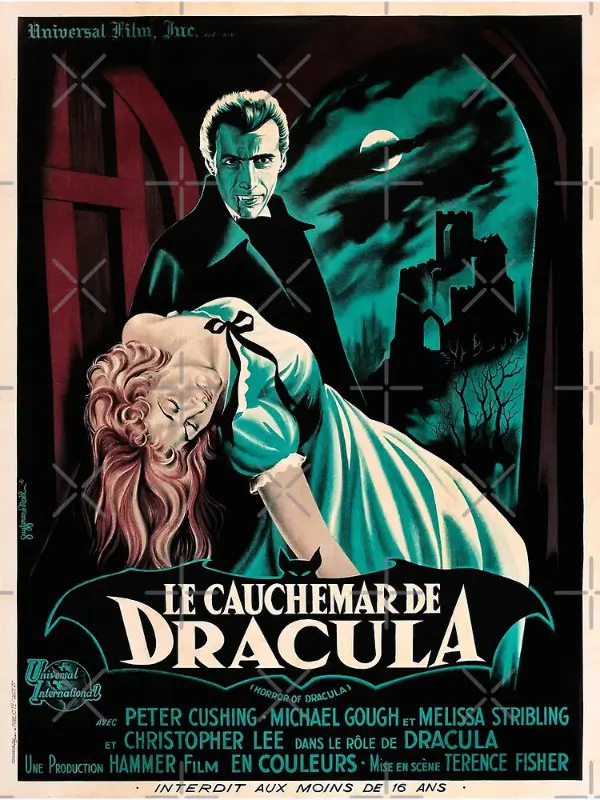
- Horror of Dracula (1958) – Classic Hammer horror: darker, bloodier, and more intense than older Hollywood takes. Pure Dracula menace, tight pacing, great gothic mood.
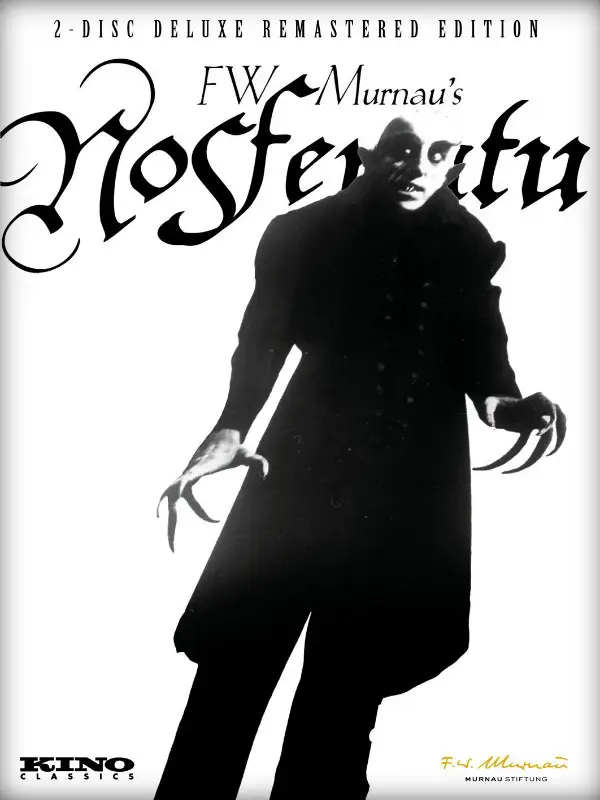
- Nosferatu (1922) – An unofficial Dracula adaptation, but still one of the creepiest vampire films ever made—expressionist visuals, nightmare energy, and a vampire design that’s straight horror.