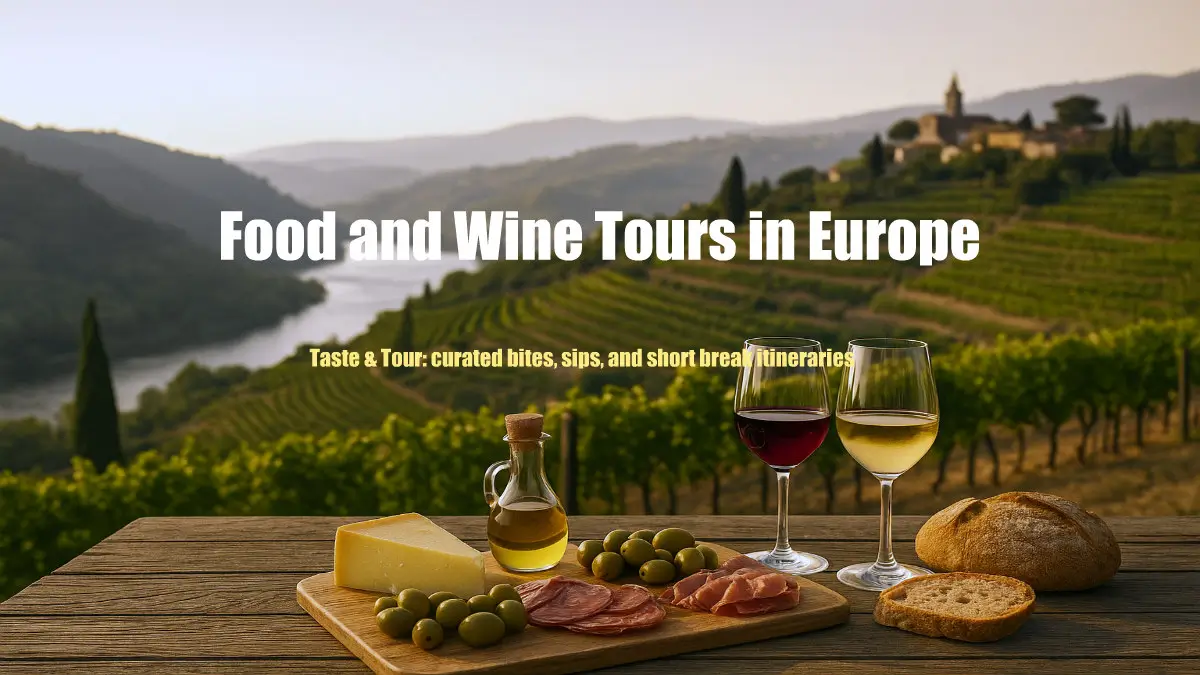
Food and Wine Tours in Europe weave culture, landscape, and tradition into every bite and sip. From market stalls and family-run trattorie to centuries-old cellars, these experiences reveal how Europe’s regions express themselves through ingredients and terroir.
Italy’s Tuscany and Piedmont pair iconic reds with farm lunches; Portugal’s Douro Valley terraces pour mineral-rich whites and ports; Spain’s Rioja and the Basque Country blend avant-garde wineries with pintxos culture; France offers range and refinement in Champagne, Bordeaux, Burgundy, and the quietly brilliant Jura; while Wachau in Austria and Istria in Croatia add river-view vineyards, olive oil mills, and truffle hunts to the mix.
The Best Season For Food and Wine Tours in Europe
The best seasons are the shoulders and harvest—April–June and September–November—when cellar doors are lively, temperatures are comfortable, and markets overflow with seasonal produce (truffles peak in autumn; coastal seafood shines in spring).
For food and wine tours in Europe, go car-free where possible: base in rail-connected hubs (Porto, Florence, Reims, Dijon, Bilbao, Vienna), then join small-group tours with hotel or station pickup.
Trains handle long hops; local transfers bring you down vineyard lanes; river boats (Douro, Wachau) and e-bikes add scenic variety. If you’re staying on a remote estate, a short rental-car segment can help—but for most tastings and cooking classes, curated tours keep logistics effortless and let you fully enjoy every glass.
Top Food and Wine Regions in Europe
- Chianti Classico is the historic heart of Tuscan red wine and agritourism, protected by the regional consortium.
- The Douro Valley is a UNESCO river landscape known for Port, terraced vineyards, and winery lunches accessible by train/boat from Porto.
- Champagne’s vineyards, houses, and chalk cellars are recognized as World Heritage and are a huge driver of tasting tourism around Reims and Épernay.
12 Food and Wine Tours in Europe
Tuscany, Italy
Chianti and Brunello cellars, farm lunches in the hills, and Florence market tastings. Classic reds, olive oil, handmade pasta — all in easy day tours.
Taste & TourLanghe (Piedmont), Italy
Barolo and Barbaresco tastings in family-run cellars, white-truffle pairings, and slow lunches with hazelnuts, cheese, and local tajarin pasta.
Taste & TourDouro Valley, Portugal
Terraced river vineyards, port and DOC wines, and estate lunches overlooking the water. Reachable by train or boat from Porto, no car needed.
Taste & TourBordeaux, France
Left Bank châteaux, Right Bank Merlot, and bistro tastings in the city. Blend cellar tours with strolls along the Garonne and cheese boards at wine bars.
Taste & TourBurgundy & Beaujolais, France
Pinot Noir, Chardonnay, and light floral Beaujolais poured in medieval villages. Gentle vineyard walks, cellar tastings, and cosy local lunches.
Taste & TourRioja, Spain (from Bilbao)
Avant-garde wineries and classic Tempranillo, paired with pintxos in Logroño. Easy hotel pickup from Bilbao for a no-car wine day.
Taste & TourChampagne, France
Reims and Épernay cellars, underground chalk caves, and tasting flights of brut, rosé, and vintage cuvées — often reachable by train from Paris.
Taste & TourSicily (Etna & Noto), Italy
Volcanic reds from Mount Etna, seafood and street food tastings in Catania and Noto, and baroque towns glowing in late-afternoon light.
Taste & TourIstria, Croatia
Malvazija whites and Teran reds poured next to olive oil mills and stone hill towns. Add truffle tastings near Motovun or coastal seafood in Rovinj.
Taste & TourRioja Small-Group Day & Pintxos
One-day Rioja wine route plus Bilbao pintxos tour: boutique wineries, barrel rooms, and perfectly paired bites, all with guided transport.
Taste & TourSomló, Hungary
Tiny volcanic hill of mineral white wines (Juhfark, Hárslevelű). Private tastings, family estates, and easy pickup options from Budapest.
Taste & TourUmbria, Italy
Truffle hunts, rustic cured meats, pecorino, and bold central Italian reds. Base yourself in Perugia or Spoleto — or book direct from Rome.
Taste & Tour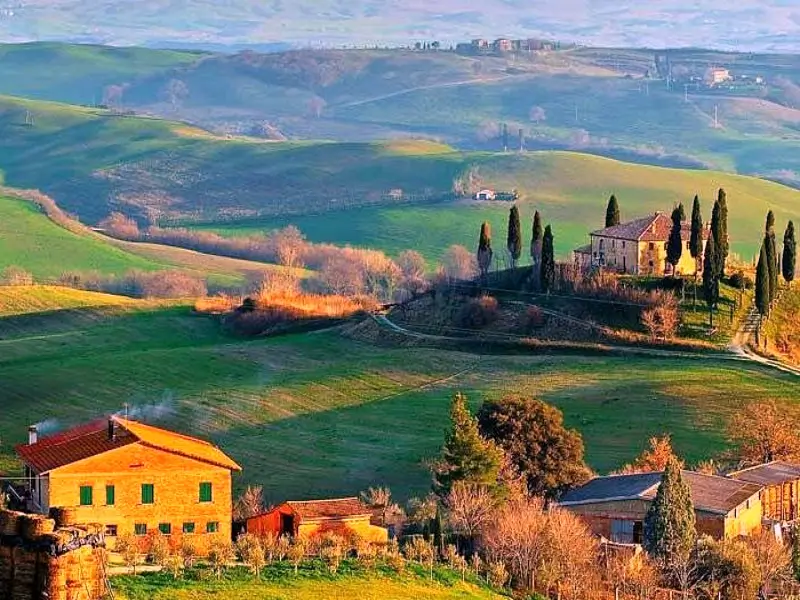
Featured Food and Wine Tours in Europe
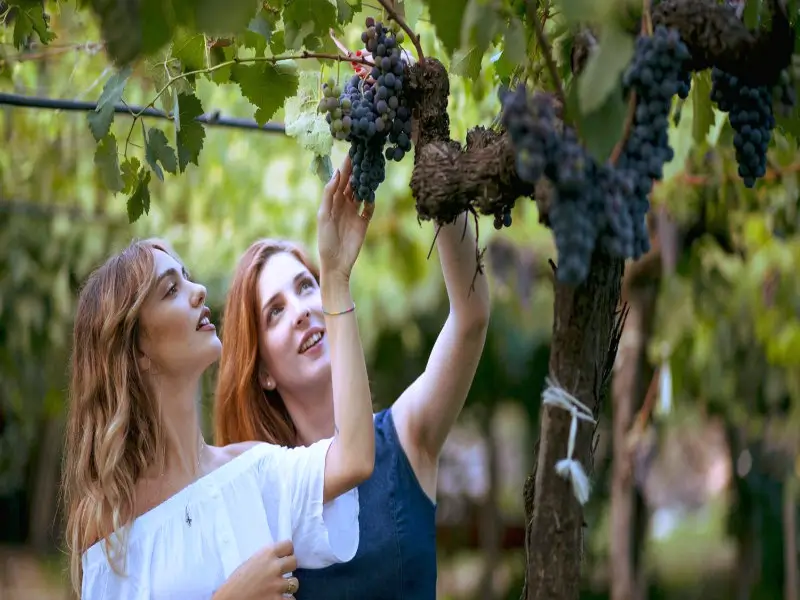
Charming Sicily Food & Wine Small Group Tour
Volcanic Etna reds, fresh seafood markets, street food in Catania, and Baroque towns like Noto — a full taste of Sicily’s bold flavours and landscapes.
View Tour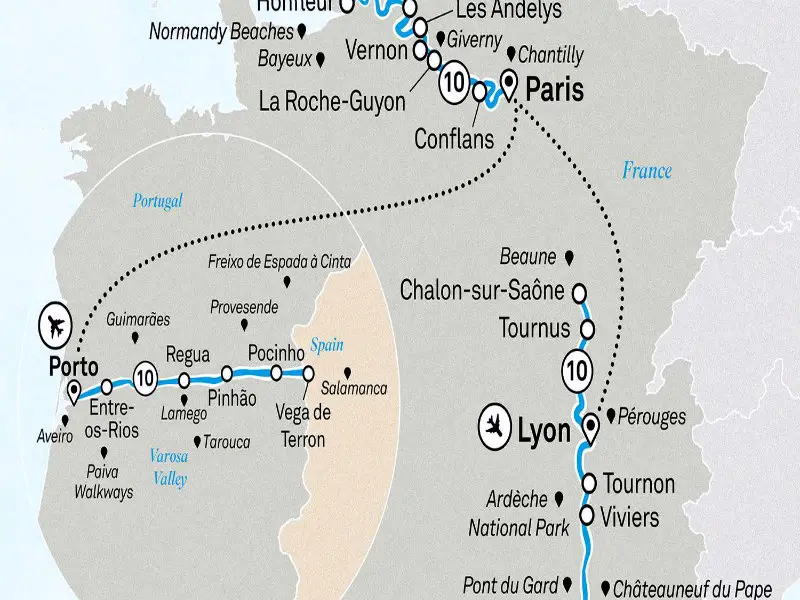
France and Portugal Encounter 2027 – Lyon to Porto
From French gastronomy and regional wines to Douro Valley terraces and Porto cellars. A once-in-a-lifetime slow-food route across two culinary capitals.
View TourFAQ: Food and Wine Tours in Europe
What are food and wine tours in Europe?
Food and wine tours in Europe are short experiences (half-day to multi-day) that combine tastings, local cooking, and vineyard or cellar visits. Typical elements include market walks, family-run wineries, hands-on cooking classes, olive oil or cheese tastings, and long regional lunches. Most tours are guided, so you don’t have to drive or plan logistics.
What are the best regions for food and wine tours in Europe?
Some of the most iconic regions are Tuscany (Chianti, Brunello), Piedmont’s Langhe (Barolo, truffle), Portugal’s Douro Valley (Port and river-view estates), Rioja in Spain (Tempranillo and pintxos), Champagne in France (Reims and Épernay cellars), and Sicily around Mount Etna (volcanic reds + street food). You can also find amazing, less crowded tastings in Umbria, Istria (Croatia), Burgundy & Beaujolais, Bordeaux, and even Somló in Hungary.
When is the best time to book food and wine tours in Europe?
The sweet spots are spring (April–June) and harvest season (September–November). In spring you get mild weather, seafood, early produce, and wild herbs. In autumn you get grape harvests, cellar activity, truffles, new oil, and fuller reds. July–August is possible, but it’s hotter, busier, and some wineries reduce visits during peak heat.
Do I need a car to visit wineries?
Usually no. The easiest way is to base yourself in a hub (Florence for Chianti, Porto for Douro, Bilbao for Rioja, Reims for Champagne, Dijon for Burgundy) and join a small-group tour with pickup. These tours handle driving between vineyards so you can taste safely. In river regions like the Douro or the Wachau, boats and trains also replace the car.
How long should a food and wine trip be?
Three to five days is ideal. With 3 days you can do one major wine day trip, one market/cooking/food tour day, and one “slow day” in the base city. With 5 days you can add a second wine area (for example Chianti + Brunello, Rioja + Basque pintxos, Champagne + Paris food markets).
Are food and wine tours in Europe suitable for beginners?
Yes. You don’t need to “know about wine.” Most guides explain grapes, regions, pairing basics, and tasting steps in plain language. Cooking classes are usually hands-on and friendly, not competitive. A lot of tours are designed for curious travelers, not experts.
What if someone in my group doesn’t drink alcohol?
Most wine-focused tours also include regional food: olive oil, cheese, charcuterie, bread, pastries, chocolate, seafood tapas, etc. Some wineries also offer grape juice or non-alcoholic must so non-drinkers can still taste “the vineyard.” In cities like Bilbao, Florence, Porto, and Palermo you can also book purely food-led tours with zero wine focus.
How much do tastings and tours cost?
Half-day small-group winery tours in Europe typically run around €70–€120 per person, including transport and multiple tastings. Full-day wine region tours with lunch can range from €120–€190+. Market-and-cooking-class experiences are often €80–€140 depending on group size and ingredients (truffle classes cost more).
Can I ship wine home during food and wine tours in Europe?
Usually yes, but rules depend on your home country and airline. Many wineries can pack bottles in airline-safe boxes or help arrange shipping. If you’re flying, a common trick is to bring (or buy) a padded wine suitcase insert so you can legally check bottles.
Which food and wine regions in Europe are less crowded but still amazing for food and wine?
If you prefer fewer tour buses and more personal tastings, look at:
– Umbria (truffle, cured meats, bold reds)
– Istria, Croatia (Malvazija, Teran, olive oil, seafood)
– Somló, Hungary (tiny volcanic white-wine hill)
– Ribeira Sacra / Galicia (river canyon vineyards and heroic terraces)