

If you’ve ever dreamed of seeing the Milky Way stretch from horizon to horizon, Europe’s Dark Sky Places deliver that once-in-a-lifetime view.
These certified dark sky parks, reserves, and communities keep natural darkness intact with shielded, warm lighting—so star fields, the Milky Way’s dust lanes, and even faint nebulae leap into focus.
In this guide you’ll find the best stargazing in Europe (from Ireland’s Kerry and England’s Northumberland to Portugal’s Alqueva, Germany’s Eifel, France’s Cévennes, Hungary’s Zselic, and La Palma in the Canary Islands), plus how to reach them, car-free options, and astro-friendly lodges that respect night skies.
We’ll also explain Novilunio (New Moon)—the prime window for the darkest, most detailed views—along with seasonal tips for spotting the Milky Way core and timing major meteor showers like the Perseids and Geminids. Whether you’re planning a quiet night under pristine stars or a guided session at an observatory, this post shows you where to go, when to go, and how to enjoy Europe’s night sky responsibly.
Map of Stargazing in Europe
Europe Dark Sky Guide: Best Stargazing Viewpoints, Access & Stays
8 Dark Sky Places in Europe
1. La Palma, Spain (Canary Islands) — Roque de los Muchachos
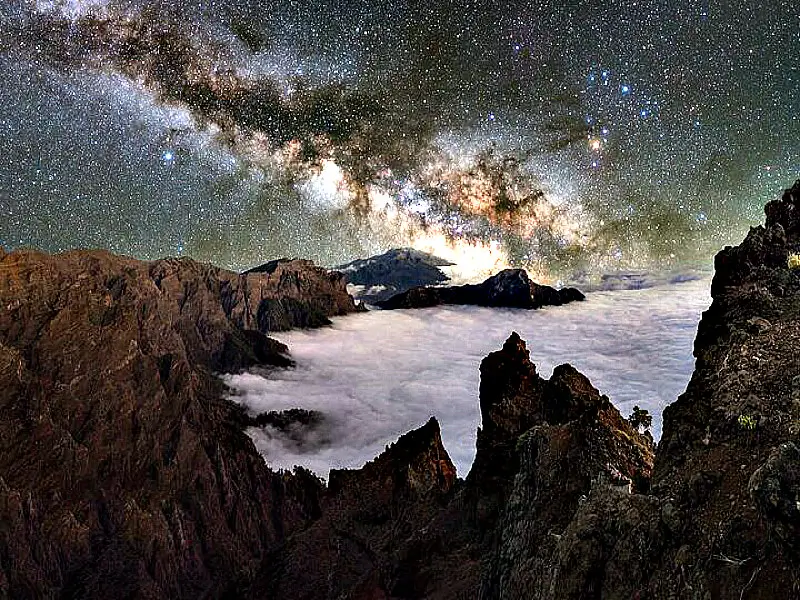
- Why go: Among the world’s top observatory sites; strong sky-protection laws and ultra-clear, high-altitude air. Visit the Observatory in La Palma!
- Best time & moon: Late Sept–May for longer dark nights; New Moon window best.
- How to get there: Fly LIS (Lisbon) or FAO (Faro) → 2–3 h drive to Monsaraz/Reguengos.
- Car-free option: Book guided visits/stargazing linked to Roque de los Muchachos Observatory (limited, pre-book).
- Notes: High elevation (2,400 m); bring warm layers even in summer.
Book one of three La Palma Stargazing tours – Roque de los Muchachos
2. Alqueva Dark Sky Reserve, Portugal
- Why go: World’s first Starlight Tourism Destination; certified reserve with observatory, astro-friendly lodges.
- Best time & moon: Late Sept–May for longer dark nights; New Moon window best.
- How to get there: Fly LIS (Lisbon) or FAO (Faro) → 2–3 h drive to Monsaraz/Reguengos.
- Car-free option: Dark Sky Alqueva Observatory sessions (solar/day & night programs).
- Notes: Warm, dry nights—great for beginners and astrophotography workshops.
4 Stargazing Activities in Portugal
3. Kerry International Dark Sky Parks, Ireland
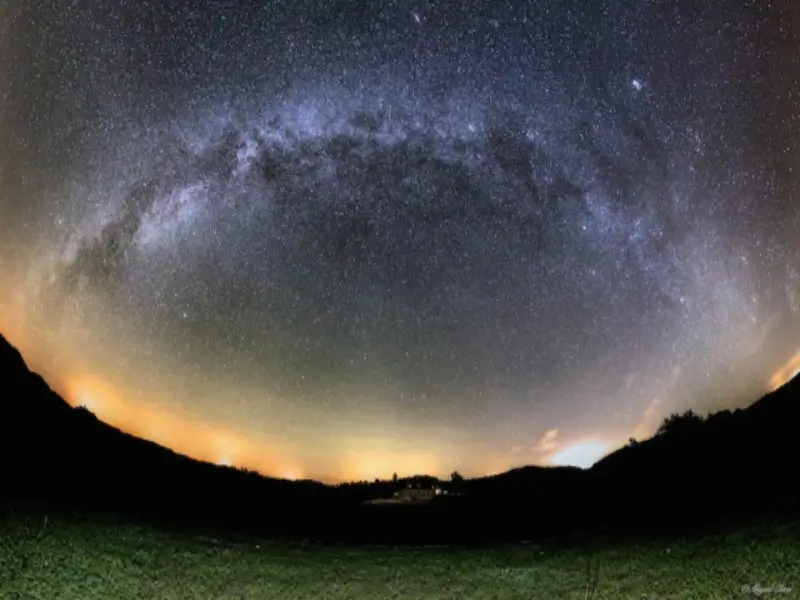
- Why go: Gold-tier skies over the Iveragh Peninsula; active community programming. DarkSky International
- Best time & moon: Oct–Mar for longest nights (watch Atlantic fronts); summer Milky Way core late at night around New Moon.
- How to get there: Fly KIR (Kerry) or SNN (Shannon) → drive the Ring of Kerry (N70).
- Car-free option: Local guided stargazing experiences around Caherdaniel–Waterville.
- Notes: Bring windproof layers; coastal weather changes fast.
4. Northumberland International Dark Sky Park, United Kingdom (England)
- Why go: One of Europe’s largest protected dark-sky areas; easy access from Newcastle/Edinburgh. Find more about this darkest sky place!
- Best time & moon: Sept–April (long nights). Watch for occasional aurora on strong KP.
- How to get there: Train to Hexham/Morpeth then drive/bus to Kielder & park hubs.
- Car-free option: Kielder Observatory nightly events (book ahead).
- Notes: Many signed “Dark Sky Discovery” sites and lay-bys for safe pull-outs.
5. Eifel National Park, Germany — Sternenpark Eifel
- Why go: Certified IDA Dark Sky Park; Milky Way visible to the naked eye on clear nights.
- Best time & moon: Sept–March for longer darkness; summer New-Moon windows also good.
- How to get there: Train to Aachen/Cologne → regional trains/bus to Schleiden/Gemünd; car adds flexibility.
- Car-free option: Park-run star walks and astronomy evenings (check Eifel NP program).
- Notes: Forested terrain—use mapped viewpoints/fields for low horizons.
6. Brecon Beacons (Bannau Brycheiniog), Wales — International Dark Sky Reserve
- Why go: UK pioneer reserve (since 2013) with plentiful signed stargazing spots. Brecon Beacon Park Society
- Best time & moon: Oct–March; or Aug New-Moon window for the Perseids.
- How to get there: Train to Abergavenny/Merthyr Tydfil → local bus/taxi into the park.
- Car-free option: National Park-led stargazing venues & events.
- Notes: Upland weather is variable; pack warm/waterproof.
7. Cévennes National Park, France — International Dark Sky Reserve
- Why go: Largest IDA Dark Sky Reserve in Europe; huge area with low light pollution and dedicated dark-sky outlooks.
- Best time & moon: Late Aug–Oct for stable weather + Milky Way evenings; winter for longest nights.
- How to get there: Train to Nîmes/Alès/Mende; best with a car for dispersed viewpoints.
- Car-free option: Park partners offer guided night walks and astronomy sessions.
- Notes: Mix of plateaus/causses—choose wide horizons for Milky Way arches.
8. Zselic Starry Sky Park, Hungary
- Why go: Early European dark-sky project; gentle hills, education center, and consistently dark horizons.
- Best time & moon: Sept–April for long nights; summer New-Moon windows for Milky Way.
- How to get there: Train from Budapest to Kaposvár → short taxi/drive into the Zselic area.
- Car-free option: Park/astronomy-club programs at the Zselic Starry Sky Park center.
- Notes: Low relief = easy beginner skies; watch for mist in low valleys—pick slight elevations.
Dark Sky Places in Italy
While Italy currently does not have any sites certified by the International Dark-Sky Association (IDA), it is home to the country's first location to receive a top global stargazing designation: the Vallone di Saint-Barthélemy in the Valle d'Aosta region.
This location, situated in the Italian Alps near the border with Switzerland, has been certified as a Starlight Stellar Park by the UNESCO-affiliated Starlight Foundation, recognizing its excellent sky quality and efforts in protecting the night environment.
Vallone di Saint-Barthélemy, Valle d'Aosta
- Why it's Dark: The valley is naturally shielded from the light pollution of large nearby cities (like Turin and Milan) by a surrounding ring of mountains. The local hamlet of Lignan has also modernized its street lighting with downward-shining LEDs to preserve the darkness.
- What to See: The area offers a remarkably clear, star-rich night sky where the Milky Way is visible.
- Attraction: The valley is home to the Astronomical Observatory of the Autonomous Region of the Aosta Valley (in the village of Lignan), which features cutting-edge equipment and a planetarium, offering guided tours and educational programs for visitors.
If you plan a visit, you may want to check for public stargazing events or guided tours at the local observatories.
- Vallon de Saint-Barthélemy
- Address: Vallon de Saint-Barthélemy, 11020 Nus AO
- View on Google Maps
Other regions in Italy are also highly regarded for stargazing in Europe, due to their high altitude, low population density, and distance from major urban centers. These include:
- Trentino-Alto Adige: Known for the Dolomites and protected areas with strict light pollution laws. Notable spots include the Malga del Doss Refuge in Ossana (Val di Sole) and the Terrazza delle Stelle (Terrace of the Stars) observatory on Monte Bondone.
- Tuscany: Southern Tuscany, particularly the Maremma, Monte Amiata, and the Farma and Merse Valleys, is praised for its wonderfully dark skies and accessibility.
- Sardinia and Sicily: Remote areas on these islands, such as the interior of Sicily, the Aeolian Islands, and parts of Sardinia, are excellent for a maritime stargazing experience.
- Emilia-Romagna: The Tuscan-Emilian Apennine National Park contains several astronomical observatories like the one at Fonti di Santa Lucia in Cervarezza Terme, known for its clean air and dark nights.
When to Go for the Best Stargazing in Europe
The best time to visit any of Dark Sky Places is generally when you have the combination of long nights, minimal moonlight, and clear weather.
1. Time of Year (Observing Season)
- Best Time: Autumn, Winter, and Early Spring (October to March)
- Reason: Nights are significantly longer and darker earlier in the evening compared to summer. The atmosphere is often clearer, leading to better viewing conditions.
- Summer (May to August)
- Challenge: Long hours of twilight (especially in Northern Europe) mean truly dark skies are only available for a short time around midnight, or not at all near the summer solstice.
- Benefit: Warmer weather is more comfortable for nighttime observing, and it's the best time of year to see the Milky Way arching high overhead (when it finally gets dark).
- For Northern Lights: If you are visiting northern destinations (Iceland, Norway, Finland, or Scotland), the prime season for the Aurora Borealis is typically September to March.
2. Time of Month (Moon Phase)
- Absolutely Best Time: The Week Around the New Moon
- Reason: The Moon's light is a form of natural light pollution. During the new moon phase (when the Moon is not visible), the sky is at its absolute darkest, allowing you to see the maximum number of stars and fainter objects like the Milky Way and nebulae with the naked eye.
- Worst Time: The week around the Full Moon.
3. Meteor Showers
To catch a spectacular display, plan your trip to coincide with a major meteor shower, ensuring it's close to the new moon for best visibility:
- Perseids: Peak in mid-August (often a good chance to see them reflected on lakes in the south). Find out what are persids?
- Geminids: Peak in mid-December (one of the year's best, but colder). Read more about Geminid meteor shower 2025 — When, where and how to see it!
How to Visit a Dark Sky Places
Visiting certified Dark Sky Places is straightforward, but requires some preparation.
1. Find a Dark Spot within the Area
Dark Sky Parks and Reserves are large. Use the official IDA website's map to locate the best viewing points, parking areas, or observatories within the reserve.
Check local park websites for designated Stargazing Viewing Sites or astronomy interpretation centers.
2. Book Accommodations
- Look for hotels, B&Bs, or campsites within or very close to the Dark Sky area. Many local accommodations market themselves as “Dark Sky Friendly.”
- Consider a Local Observatory: Many observatories (like Kielder in England or the Dark Sky Alqueva Observatory in Portugal) offer public viewing events that are a great introduction to the night sky.
3. Essential Gear to Bring
- Warm Layers: Even in summer, mountain and desert nights get cold. Jackets, hats, gloves, and thermal socks are a must.
- Red Light Torch (Flashlight): White light destroys night vision. Use a torch with a red filter or a dedicated red-light headlamp to see your surroundings without compromising your or others' vision.
- A Mat or Camping Chair: Stargazing is better when you're lying down or reclining.
- Binoculars: Even basic binoculars (like 10×50) will offer stunning close-ups of the moon, star clusters, and nebulae.
- Star Map/App: Use a paper star map or a dedicated app (like Stellarium or SkyView) with a red-light mode to identify constellations.
4. Respect Dark Sky Etiquette
- Turn Off All Lights: When you're at a viewing spot, turn off all car lights and put your phone screen on the lowest brightness (preferably with a red filter).
- Be Mindful of Others: Avoid shining light (even red light) toward other people's eyes or telescopes.
- Leave No Trace: Take all trash with you and respect the protected natural environment.
What is the best time to see the Milky Way in Europe?
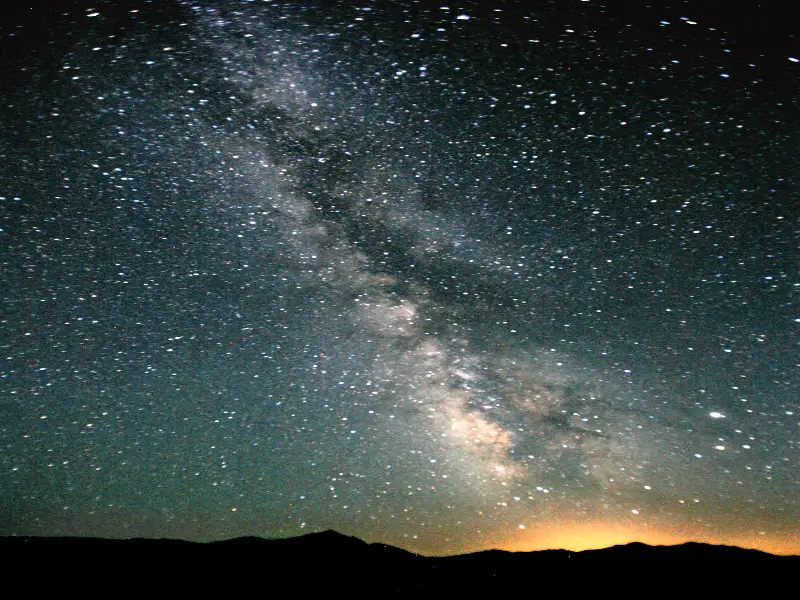
What is the Milky Way Core?
The “Milky Way Core,” or Galactic Center (GC), refers to the brightest and densest region of our galaxy as seen from Earth. Read more about MilkyWay!
1. Time of Year (The Season)
Best Viewing Window for the Core: Late March to Late September
- This is the window when the Milky Way Core (Galactic Center) is above the horizon during nighttime hours in the Northern Hemisphere.
Peak Viewing Months for the Core: Late June, July, and August
- During these summer months, the Core is highest in the sky and is visible for the longest period during the night, typically dominating the southern sky around midnight to the early hours of the morning.
- Viewing by Time of Night:
- Spring (March–May): You must stay up late or wake up early. The Core rises in the Southeast just before dawn and is low on the horizon.
- Summer (June–August): The Core is visible for the longest period, rising earlier and passing highest overhead (in the southern sky) around midnight.
- Autumn (September–October): The Core is still visible but sets quickly in the Southwest soon after evening twilight ends.
- Winter (November–February): The Core is generally not visible because it is below the horizon or only above the horizon during daylight hours. During these months, you look outward toward the less concentrated arms of the galaxy.
2. Time of Month (The Moon)
The absolute most important factor for naked-eye viewing is the Moon Phase.
- Best Time: The Week Surrounding the New Moon
- The light from a bright Moon (especially a Full Moon) acts as natural light pollution, washing out the subtle, milky glow of the Milky Way.
- Always plan your trip to a dark sky location during the New Moon phase to ensure the darkest possible skies.
3. Location Requirement
Even during the best time, you must be in a truly Dark Sky Location (Bortle Class 4 or lower). From most city or suburban areas, the Milky Way is completely invisible.
Ultimately, these Dark Sky Places are more than just beautiful travel destinations; they are vital sanctuaries in an increasingly light-polluted world. Whether you choose to gaze up at the high-altitude wonders of Teide National Park or explore the coastal darkness of the Kerry Reserve, you are supporting the crucial mission of preserving nocturnal environments.
Remember to practice dark sky etiquette, use a red-light flashlight, and tell others about your experience. Your next dark sky trip isn't just a vacation—it's an act of conservation.
Here are the New Moon dates for the key stargazing months in 2026 (in Central European Time, CET), which represent the absolute best periods for dark sky viewing:
| Month | New Moon Date (Peak Darkness) | Ideal Stargazing Window (Approx.) | Key Astronomical Event |
| March | March 19 | March 16 – March 22 | Marks the start of the Core Season (though the core is low). |
| April | April 17 | April 14 – April 20 | Clear spring skies for constellation viewing. |
| May | May 16 | May 13 – May 19 | Milky Way Core becomes higher in the sky. |
| June | June 15 | June 12 – June 18 | Excellent for viewing the high-arching Milky Way. |
| July | July 14 | July 11 – July 17 | Prime summer night for the highest-arching Milky Way Core. |
| August | August 13 | August 10 – August 16 | Optimal! Coincides with the peak of the Perseids Meteor Shower. |
| September | September 11 | September 8 – September 14 | Great weather and dark nights before winter sets in. |
| December | December 18 | December 15 – December 21 | Perfect for viewing the Geminids Meteor Shower (if you go slightly earlier, Dec 13–14 is the Geminids peak). |
Recommendation for Your Trip
For the best overall dark sky trip in Europe:
- Best Milky Way View (Clear Skies): Aim for the July 14 or August 13 New Moon period.
- Best Combined View (Perseids + Milky Way): The August 10–16, 2026 window is the clear winner, as the New Moon coincides perfectly with the peak of the spectacular Perseids meteor shower.
- Top destination – Alqueva Dark Sky Reserve in Portugal
- Check-in: August 12, 2026
- Check-out: August 15, 2026 (3 nights)
- Adults: Among all Dark Sky Places in Europe – The Alqueva Dark Sky Reserve is a premier location for stargazing.