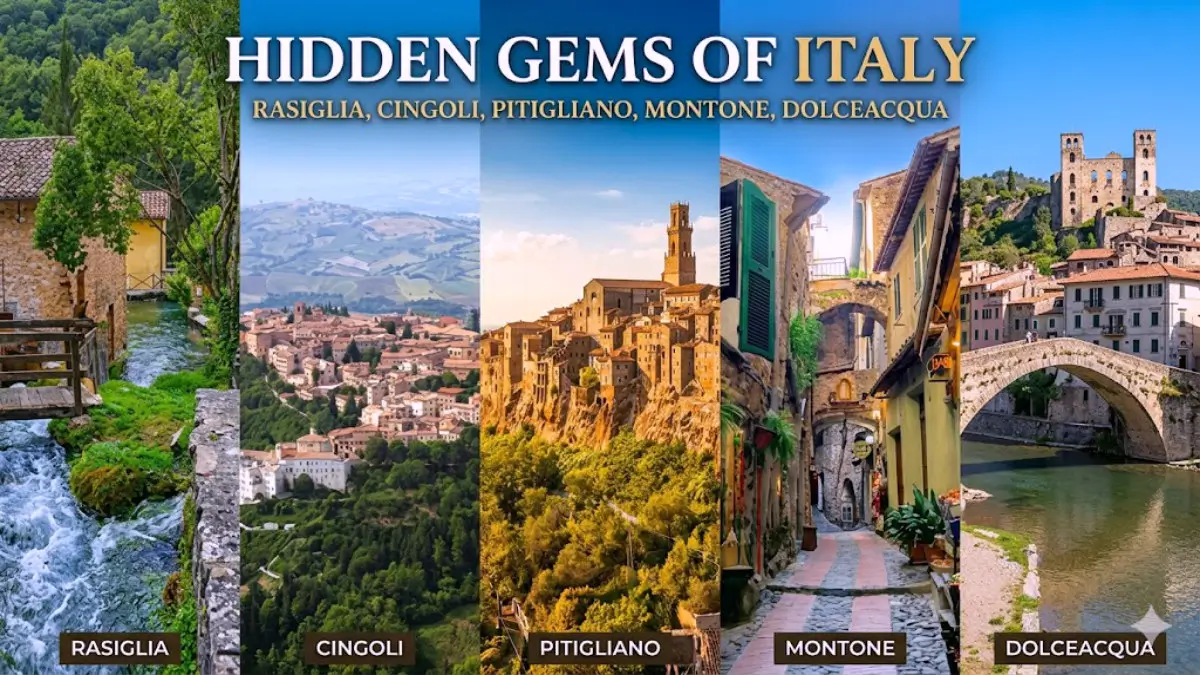
Villages of Water, Stone, and Greenery: Most Beautiful Villages in Italy to Visit on Spring Weekends
Most beautiful villages in Italy are often the perfect choice for a spring weekend, especially if you want water, stone streets, medieval atmosphere, and green landscapes.
These villages are naturally connected with I Borghi più belli d’Italia, the official association that promotes over 350 selected Italian villages.
Italy is a mosaic of hidden treasures, a country where every region preserves rare gems of history, beauty, and tradition waiting to be discovered.
Small towns where time seems to have stopped in the Middle Ages, fortified villages wrapped in mighty defensive walls, and well-kept secrets: these are Italy’s borghi.
The association I Borghi più belli d’Italia was founded in 2002 to promote the extraordinary heritage of history, art, culture, and landscapes found in Italy’s smaller towns.
Today, it includes more than 350 selected and certified villages. Here are five unmissable destinations for anyone looking to discover a more authentic, lesser-known side of Italy, perhaps on a weekend getaway.
Map of the most beautiful villages in Italy featured in this guide: from Rasiglia’s waterways to Dolceacqua’s Ligurian stone lanes, these five destinations are perfect for a slow spring weekend among water, history, and green landscapes.
Map of the Villages Featured in This Article
Use these Google Maps links to locate the five beautiful Italian villages mentioned in this guide.
5 Most Beautiful Villages in Italy to Visit on a Spring Weekend
1. Rasiglia: Umbria’s Little Venice
Known as the “Venice of Umbria” or the “village of streams,” Rasiglia is one of the most beautiful villages in Umbria. This secret gem, not far from Foligno, is a magical village where water is the true star, flowing freely between stone houses.
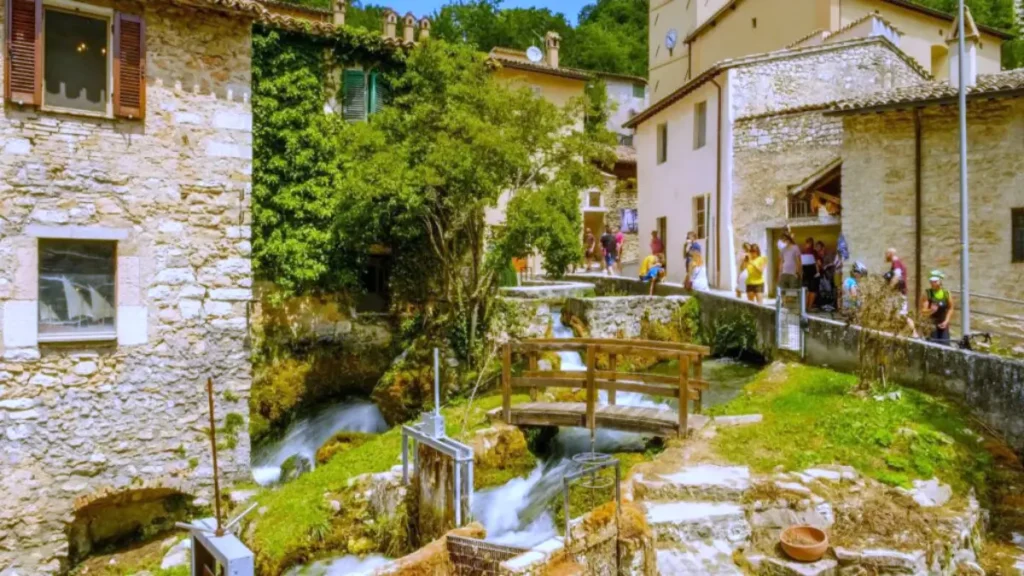
Made up of about fifty small homes at an elevation of around 2,000 feet, the village is crossed by the waterways of the Capovena spring and the Menotre River.
Famous for its many clear streams, Rasiglia is filled with canals and small waterfalls that run right beside the stone houses, creating a truly unique atmosphere. Thanks to the power of water, the village was once an important textile center, and even today, visitors can still see the remains of old mills and workshops.
Despite the passing of time, Rasiglia has kept its simple and authentic appearance. From the village, it is also possible to reach nearby natural attractions such as the Menotre Waterfalls, a peaceful green corner surrounded by nature.
Visit Marmore Waterfalls from Assisi
Add one of Umbria’s most impressive natural sights to your trip with a transfer from Assisi to the Marmore Waterfalls, a spectacular stop for nature lovers.
💦 Check Marmore Waterfalls Transfer AvailabilityHow to get to Rasiglia, Umbria?
- By car – Rasiglia is one of the easiest villages to visit by car in Umbria. It is about 20 km from Foligno, and the drive usually takes around 25–30 minutes. From Foligno, follow the road toward the Val di Chienti / Colfiorito area and then continue toward Rasiglia. Public parking is available outside the historic center, which is best explored on foot.
- By Bus – Rasiglia can also be reached by bus from Foligno. The bus journey takes about 34 minutes, with services operated by Busitalia Umbria. Some seasonal shuttle services may also run from Foligno, Belfiore, and Casenove during summer periods, so it is worth checking the latest timetable before traveling.
- Best base: Foligno
- Best option: Car or bus from Foligno
2. Cingoli: The Balcony of the Marche and Winner of Borgo dei Borghi 2026
This year, the title of Borgo dei Borghi 2026 goes to Cingoli, in the province of Macerata. Crowned winner thanks to its landscapes, art, and understated charm, Cingoli has long been known as the “Balcony of the Marche.”
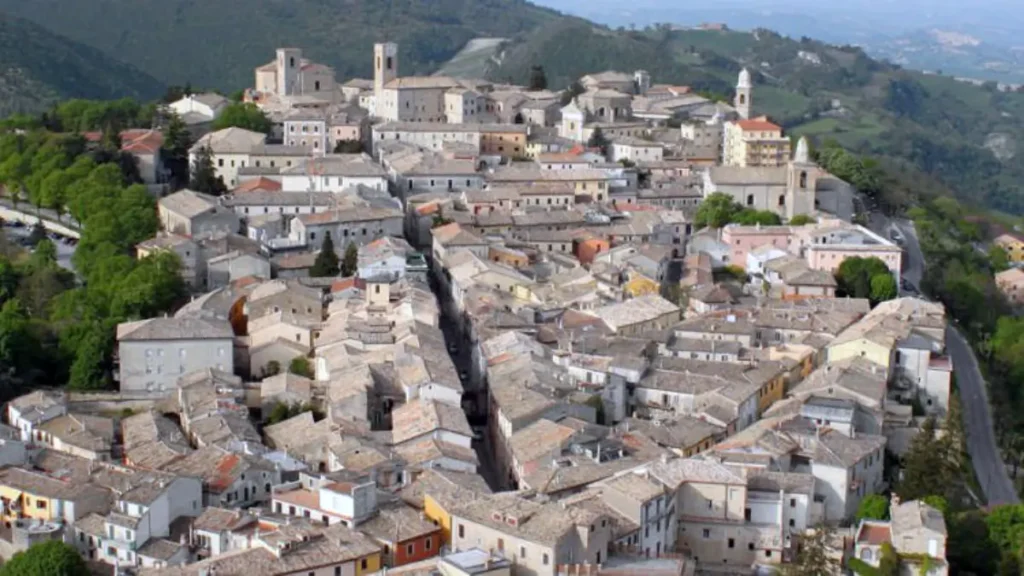
Its extraordinary panoramic position and well-preserved historic center won over both the public and the jury. Already considered one of the most beautiful villages in the Marche region, Cingoli offers views that, on clear days, stretch as far as Mount Conero and the Gran Sasso.
Cingoli’s urban layout still preserves its medieval structure, with stone streets, scenic viewpoints, and historic buildings. This is combined with an important artistic heritage that attracts lovers of art and culture.
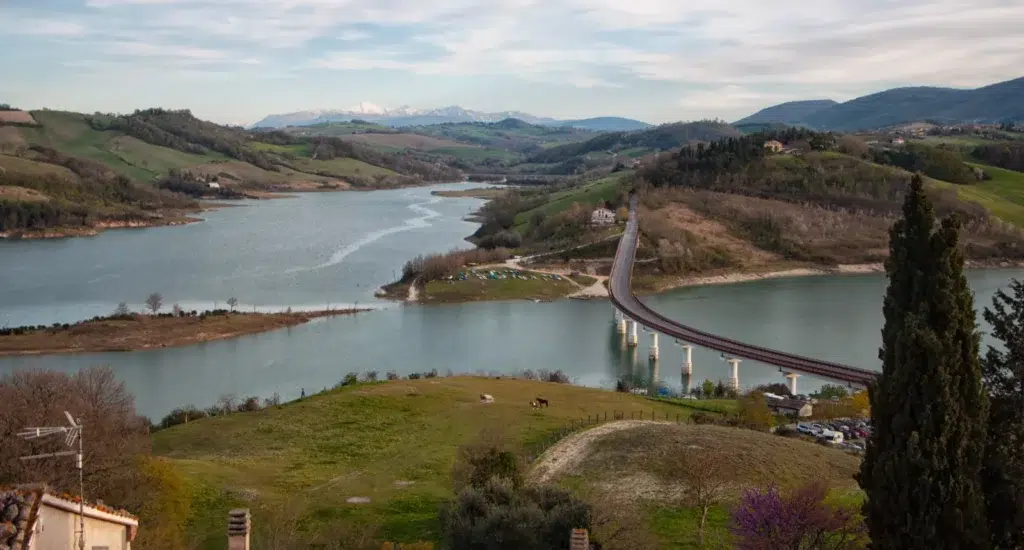
The town is also very close to Lake Castreccioni-Cingoli, one of the largest artificial lakes in central Italy, popular for sailing, kayaking, and summer swimming.
Explore Frasassi Caves and Cingoli
Visit the spectacular Frasassi Caves and continue to Cingoli, the “Balcony of the Marche,” on a guided experience through one of central Italy’s most scenic areas.
🏞️ Check Frasassi Caves & Cingoli Tour AvailabilityHow to get to Cingoli, Marche
- By car – Cingoli is located in the province of Macerata, in the Marche region. It is known as the “Balcony of the Marche” because of its panoramic position. By car, it is a good stop on a Marche countryside itinerary, especially if combined with Macerata, Jesi, or the Castreccioni-Cingoli Lake area.
- By Bus – Cingoli can be reached by bus from Macerata. There are direct bus connections between Macerata and Cingoli, with a journey time of about 48–50 minutes. Services are more limited than in larger cities, so this route works better if you check the timetable carefully in advance.
- Best base: Macerata or Jesi
- Best option: Car, but the bus from Macerata is possible
3. Pitigliano: The Town Carved into Tuff Stone
Perched on a tuff cliff, Pitigliano looks like a natural sculpture where architecture and rock blend into one. The houses seem to rise directly from the cliffside, creating a striking visual effect, especially at sunset when the stone turns golden.
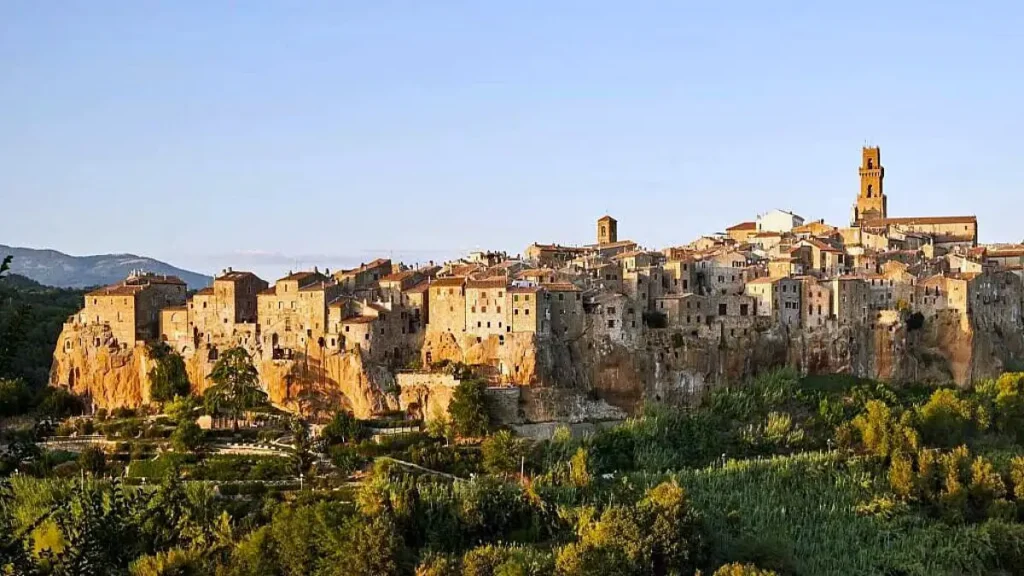
Among ancient alleys, arches, and carved passageways, the village tells a thousand-year-old story of resilience and ingenuity, perfectly balanced between nature and human craftsmanship. It's one of the most fascinating villages in Tuscany.
Pitigliano is one of the most dramatic hilltop towns in Tuscany, famous for its position on a tuff ridge. It is also known as “Little Jerusalem” because of its historic Jewish community, which settled here in the 16th century.
Today, traces of that history remain visible in places such as the synagogue and the Jewish quarter. It is a place where the boundary between human creation and natural wonder seems to disappear, offering visitors an almost surreal experience.
Visit Pitigliano and the Saturnia Hot Springs
Discover Pitigliano, one of Tuscany’s most scenic hilltop villages, and combine it with a relaxing visit to the famous Saturnia hot springs on a guided bus tour.
♨️ Check Pitigliano & Saturnia Tour AvailabilityHow to reach Pitigliano, Tuscany
- By Car – Pitigliano is best reached by car. It is located in southern Tuscany, in the Maremma area, close to other beautiful places such as Sovana, Sorano, and the Saturnia hot springs. A car is the most practical option because the village is not directly connected by train, and public transport can be slow.
- By Bus – Pitigliano can be reached by bus, but the journey often requires changes. The official tourism information for Pitigliano mentions bus connections from Siena, Florence, and Grosseto, with Tiemme services in Tuscany and Cotral connections from Viterbo. From Orvieto, there is no direct bus; the route usually requires a change at San Lorenzo Nuovo and takes around 2 hours and 26 minutes. How to get to Pitigliano?
4. Montone: A Medieval Village Surrounded by the Green Hills of Umbria
Montone is one of the most beautiful villages in Italy. Montone is a small village in northern Umbria, set on a high hill surrounded by greenery and overlooking the Upper Tiber Valley and the Carpina Valley. It is a true oasis for anyone looking to escape the pace and noise of city life.
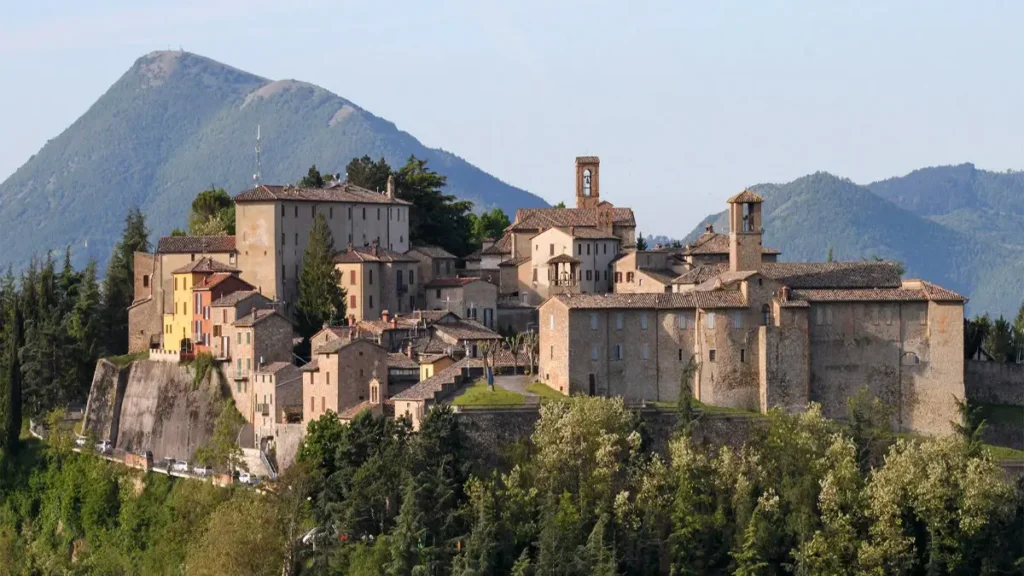
The village is enclosed by impressive medieval walls, allowing visitors to step into an atmosphere suspended between the Middle Ages and the Renaissance. Once through one of its gates, you can wander through a medieval layout of slopes, stairways, narrow lanes, and arches that has remained almost unchanged since the 12th century. This makes Montone nearly unique in Italy and has earned it a place among I Borghi più belli d’Italia.
Beyond its medieval character and lively local events, Montone also offers many opportunities for outdoor activities. Visitors can enjoy beautiful walking trails surrounded by greenery or more demanding routes through the Carpina Valley. It is a complete immersion in the authentic nature of central Italy.
Visit Montone by E-Bike
Explore the medieval village of Montone on an e-bike tour through the Umbrian countryside, with charming hilltop views and a winery visit included.
🚴 Check Montone E-Bike Tour AvailabilityHow to get to Montone?
- By Car – Montone is a small hilltop village in northern Umbria, near Umbertide. By car, it is around 45 km from Perugia, usually about 45 minutes, and around 20 km from Città di Castello. There are small parking areas near the historic center and the lower entrance to the town.
- By bus – The nearest useful transport hub is Umbertide. From Umbertide, local buses connect to Montone in about 15 minutes, although services may be limited depending on the day and season. From Perugia, there is no direct bus to Montone; you usually need to change at Umbertide.
- Best base: Umbertide or Perugia.
- Best option: Car; bus is possible from Umbertide.
5. Dolceacqua: The Ligurian Village That Captivated Monet
In the heart of the Nervia Valley in Liguria, Dolceacqua is a village so charming that it even fascinated the Impressionist painter Claude Monet. It is one of the most picturesque villages in Liguria.
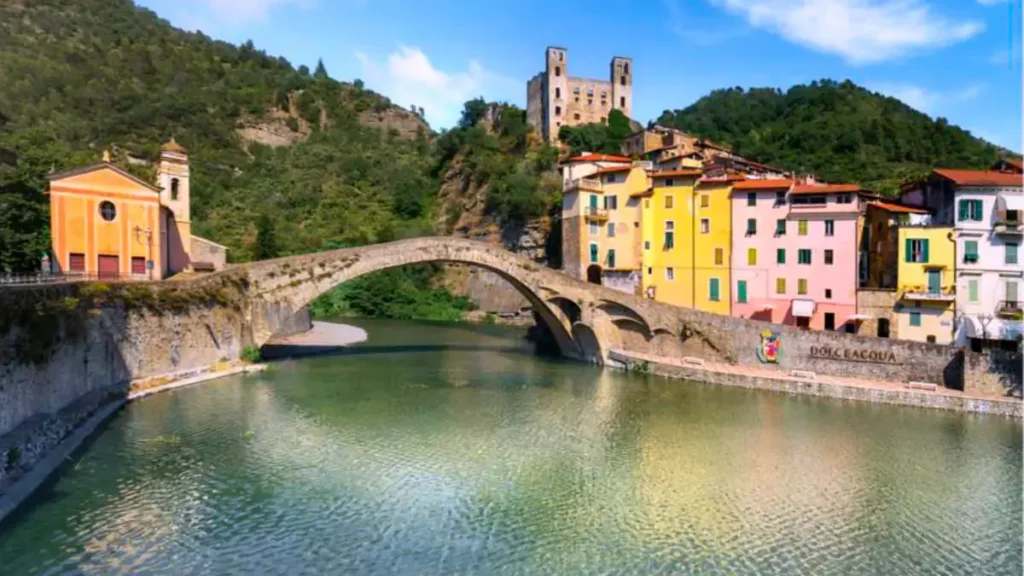
Its fairytale atmosphere is shaped by the Nervia stream, which divides the village in two, and by the imposing Doria Castle that rises above it. To enter the oldest part of the village, known as Terra, visitors cross the magnificent arched Ponte Vecchio, a “jewel of lightness,” as Monet himself described it.
He painted the bridge in several of his works. Wandering through the carugi, the narrow lanes typical of Liguria, is the best way to experience the timeless magic of this place.
Its walls have witnessed centuries of history, from the conflicts between Guelphs and Ghibellines to Savoy rule. Today, Dolceacqua holds the Orange Flag, a mark of tourism and environmental quality awarded by the Italian Touring Club.
It is a place where the water of the stream, the stone of the alleys, and the green of the surrounding olive groves come together in perfect harmony, creating a postcard-like scene that continues to inspire artists and travelers from around the world.
Explore Dolceacqua by E-Bike
Discover Dolceacqua and the beautiful Nervia Valley on an e-bike tour from Ventimiglia, with riverside scenery, historic villages, and a relaxed outdoor experience.
🚴 Check E-Bike Tour AvailabilityHow to reach Dolceacqua?
- By Car – Dolceacqua is one of the easiest villages to include in a Ligurian Riviera itinerary. It is only about 9–10 km from Ventimiglia, and the drive usually takes around 10–15 minutes. It can also be combined with Sanremo, Bordighera, Apricale, or even a cross-border trip from Nice.
- By Bus – Dolceacqua is also quite practical by public transport. From Ventimiglia, you can take the local bus 7 toward Dolceacqua. The ride takes around 13 minutes according to Rome2Rio, while some local travel guides suggest around 30 minutes depending on the exact stop and timetable. Ventimiglia is the nearest train station and has rail connections from both the Italian Riviera and nearby Nice in France.
- Best base: Ventimiglia, Bordighera, Sanremo or Nice.
- Best option: Bus from Ventimiglia or car.
The most beautiful villages in Italy are often the places where the country feels most authentic: quiet stone lanes, medieval walls, rivers, hilltop views, and landscapes that invite you to slow down.
From the water channels of Rasiglia to the panoramic streets of Cingoli, the tuff cliffs of Pitigliano, the green hills around Montone, and the Ligurian charm of Dolceacqua, each village offers a different way to experience Italy beyond the big cities.
A spring weekend is one of the best times to visit these borghi, when the weather is mild, the countryside is green, and the atmosphere is relaxed. Whether you travel by car, join an organized tour, or use local buses where possible, these villages are perfect for discovering a quieter, more timeless side of Italy.