
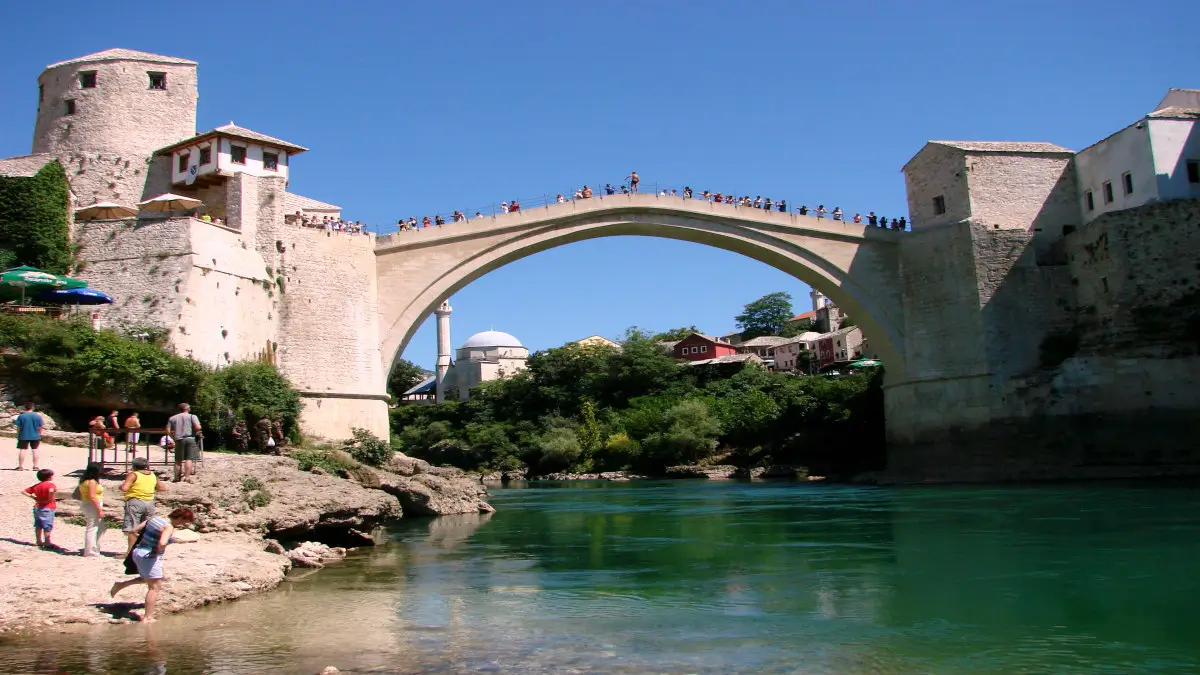
This is a great opportunity to take advantage of one of the war in Bosnia and Herzegovina tours, to understand how between 1992 and 1995, Bosnia and Herzegovina endured one of Europe’s darkest chapters since WWII.
The war left deep scars on cities, families, and the nation’s identity. Today, the country has rebuilt with resilience and hope, while preserving the memory of its turbulent past.
Visiting Bosnia’s war-related sites — from Sarajevo siege tours and the Tunnel of Hope in Sarajevo to the rebuilt Old Bridge of Mostar and the Srebrenica Memorial — offers powerful insight into how tragedy can transform into strength. Guided tours help travelers understand not just history, but the courage of those who lived through it.
The Importance of War in Bosnia and Herzegovina Tours
Taking part in war history tours across Bosnia and Herzegovina is far more than a sightseeing experience — it’s an encounter with the country’s living memory. These guided visits to Sarajevo, Mostar, and Srebrenica allow travelers to understand what ordinary people endured during the 1990s conflict and how the nation has rebuilt itself through courage and reconciliation.
With the help of local guides, survivors, and historians, visitors gain authentic insight into the causes and consequences of the war — stories you won’t find in textbooks. Walking through sites like the Tunnel of Hope, Sniper Alley, or the Srebrenica Memorial connects travelers to the resilience of Bosnia’s citizens and their message of “never again.”
Beyond remembrance, these tours also support peace education and responsible tourism. Entrance fees and guide earnings help maintain museums and memorials, preserving them for future generations. They show that tourism can honor the past while contributing to healing and dialogue.
In short, War in Bosnia and Herzegovina tours offer a meaningful way to travel — combining history, empathy, and humanity. They remind us how fragile peace can be and why it must never be taken for granted.
The Siege of Sarajevo (1992–1996)
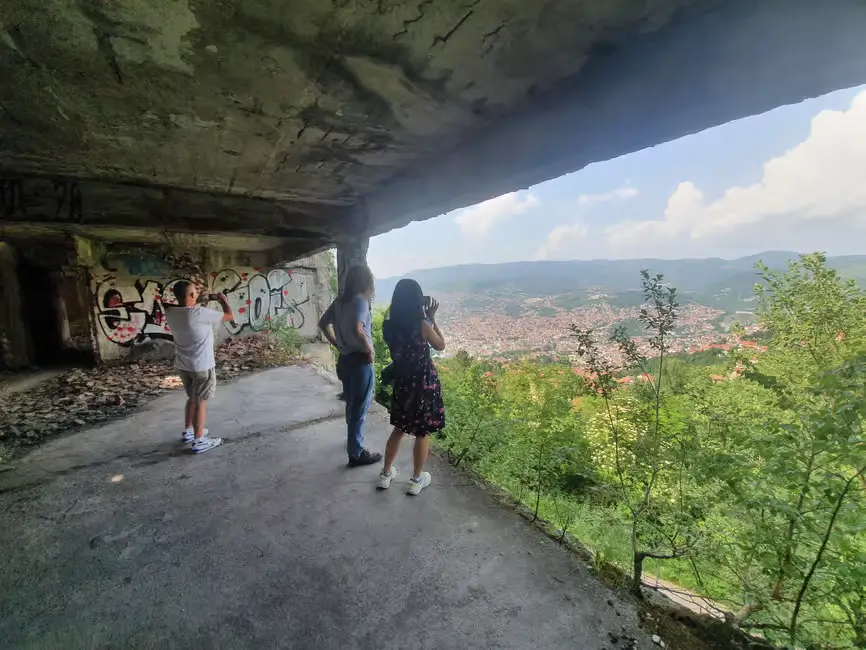
For almost four years, Sarajevo was under siege — surrounded by mountains controlled by enemy forces. Citizens lived without regular water, food, or electricity, and lived under constant sniper fire. Yet life continued: theaters reopened, children went to school, and people held on to hope.
Key places to visit:
- Tunnel of Hope (Tunel Spasa) — an underground lifeline connecting the city with the outside world. Read more!
- Sniper Alley — the infamous main boulevard where civilians risked their lives every day. Read more!
- War Childhood Museum — moving testimonies from those who were children during the war. Read more!
Recommended tours:
- War in Bosnia & Fall of Yugoslavia (includes Tunnel of Hope)
- Sarajevo Under Siege — Half-Day History Tour
- Roses of Sarajevo tour.
Visiting the Sarajevo Tunnel of Hope
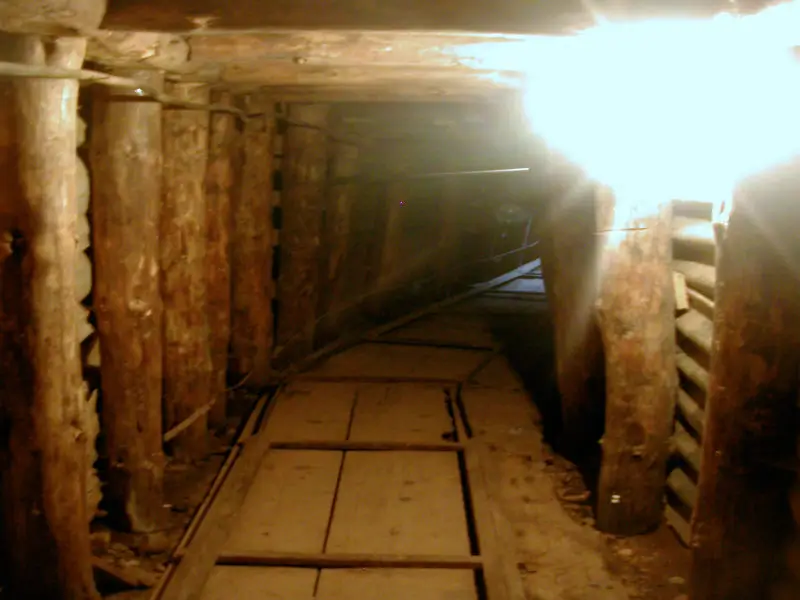
Hidden beneath a small house on the outskirts of Sarajevo lies one of the most moving symbols of the city’s survival — the Tunnel of Hope (Tunel Spasa). Built secretly in 1993 during the longest siege in modern European history, this narrow underground passage connected the besieged city with the free Bosnian territory beyond the airport runway.
Through this tunnel, civilians carried food, medicine, and essential supplies, while messages, wounded people, and even electricity lines passed through its dark corridor. The tunnel was Sarajevo’s only lifeline — a passage of courage, ingenuity, and hope against impossible odds.
Today, visitors can walk through a preserved section of the tunnel at the Tunnel Museum, located in the original Kolar family house. Exhibits include wartime footage, photographs, uniforms, and the tools used by volunteers who dug the passage by hand.
Stepping inside this space is an unforgettable experience — one that vividly tells the story of how ordinary citizens defied siege and despair with creativity and determination. It’s one of the most impressive war in Bosnia and Herzegovina tours.
Mostar war history
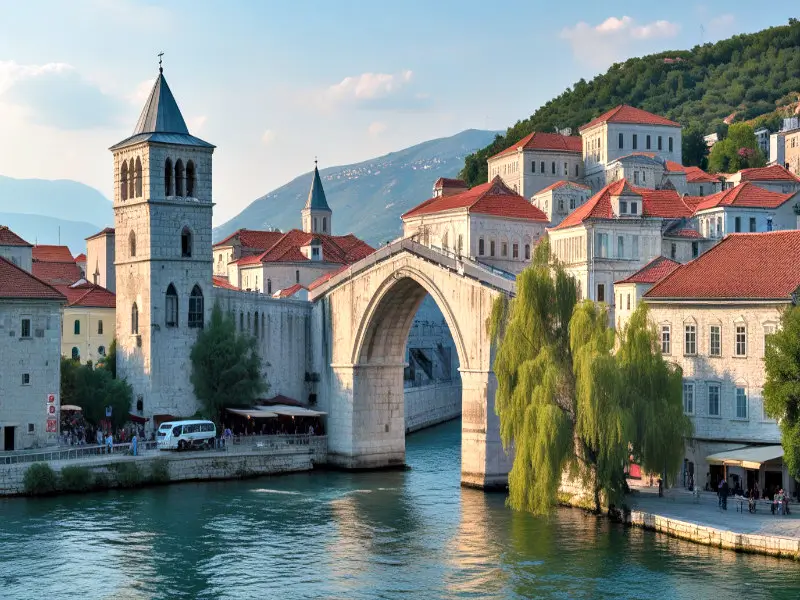
Mostar became a symbol of division during the war — and of reconciliation after it. In 1993, the city’s iconic Old Bridge (Stari Most), a masterpiece of Ottoman architecture, was destroyed. Rebuilt in 2004, it now stands as a UNESCO World Heritage Site and a global symbol of peace.
Guided History Tour • Mostar
Uncover Mostar’s War History and the “Death of Yugoslavia”
Step into Mostar’s powerful wartime past and learn how the breakup of Yugoslavia shaped this divided city. Visit front-line streets, destroyed neighborhoods, and the rebuilt Old Bridge — a symbol of reconciliation and peace.
Book the War in Mostar TourLocal experts • Small groups • Free cancellation
Srebrenica memorial visit
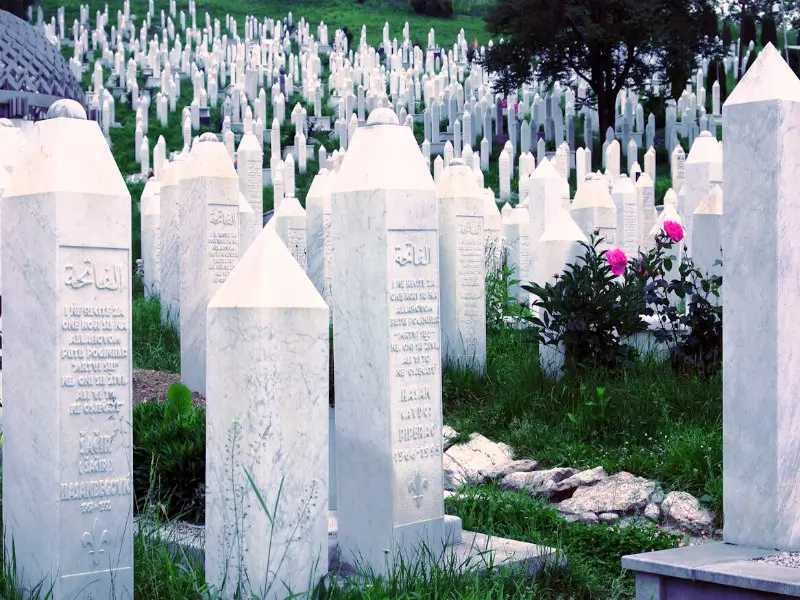
The small town of Srebrenica, once declared a UN “safe area,” became the site of Europe’s worst massacre since WWII. In July 1995, more than 8,000 Bosniak men and boys were executed. Today, the Srebrenica–Potočari Memorial Center and Cemetery stands as a solemn reminder of the consequences of hate and the importance of peace.
Visiting Srebrenica is an emotional experience — one that encourages reflection, empathy, and a deeper understanding of how fragile peace can be.
Memorial • Education • Remembrance
Visit the Srebrenica Genocide Memorial with Expert Guides
A moving, reflective experience in Eastern Bosnia. Join a guided tour from Sarajevo to the **Potočari Memorial and Cemetery**, hear survivors’ accounts, and learn about Bosnia’s path toward accountability and healing.
Book the Srebrenica TourSmall group • Local insights • Respectful journey
FAQ: Bosnia remembrance tours
Is it respectful to visit Bosnia’s war-related sites?
Yes — guided tours are designed to educate and honor victims. Visitors are encouraged to behave respectfully and learn from local perspectives.
When is the best time to visit Bosnia and Herzegovina?
From April to October, when the weather is pleasant for walking tours and exploring outdoor memorials.
What should I wear or avoid when visiting memorials?
Dress modestly and avoid loud or insensitive behavior. Photography is usually allowed, but always ask your guide first.
Are these tours suitable for children?
Some tours, especially those about the Srebrenica genocide, may be emotionally heavy. Guides can adapt content for mature teenagers.
Further Reading & Reliable Sources
Learn more about the history, memory, and legacy of the Bosnian War through trusted educational and memorial resources.
-
The Siege of Sarajevo – Historical Overview
Discover the longest siege in modern European history (1992–1996) and its profound impact on Sarajevo’s citizens.
-
Srebrenica Genocide Memorial Center
Official memorial site honoring over 8,000 victims of the 1995 genocide, dedicated to remembrance and peace education.
-
Tunnel of Hope Museum – Sarajevo’s Lifeline
Visit the museum preserving the underground tunnel that kept Sarajevo connected to the outside world during the siege.
-
United Nations Report on the Bosnian War
An in-depth summary from the United Nations on the causes, humanitarian crisis, and response to the Bosnian conflict.
-
History of the Bosnian War – Britannica Overview
A concise, factual overview of the Bosnian War and the peace process that ended the conflict with the Dayton Agreement.
Conclusion
Exploring Bosnia and Herzegovina’s war history is not dark tourism — it’s a journey through memory, survival, and the strength of humanity. From the underground tunnels of Sarajevo to the rebuilt bridges of Mostar and the solemn graves of Srebrenica, every site carries a message: never again.
By joining guided tours and listening to the stories of locals, you help keep the memory alive while supporting a nation that turned its deepest wounds into symbols of peace.
Guided • Historical • Educational
Discover Bosnia’s War History Through Guided Tours
Travel across Sarajevo, Mostar, and Srebrenica with expert local guides who share authentic stories from the Bosnian War. Visit museums, memorials, and landmarks that reveal a nation’s path from conflict to peace.
Explore Bosnia War History ToursTrusted partners • Local experts • Free cancellation