
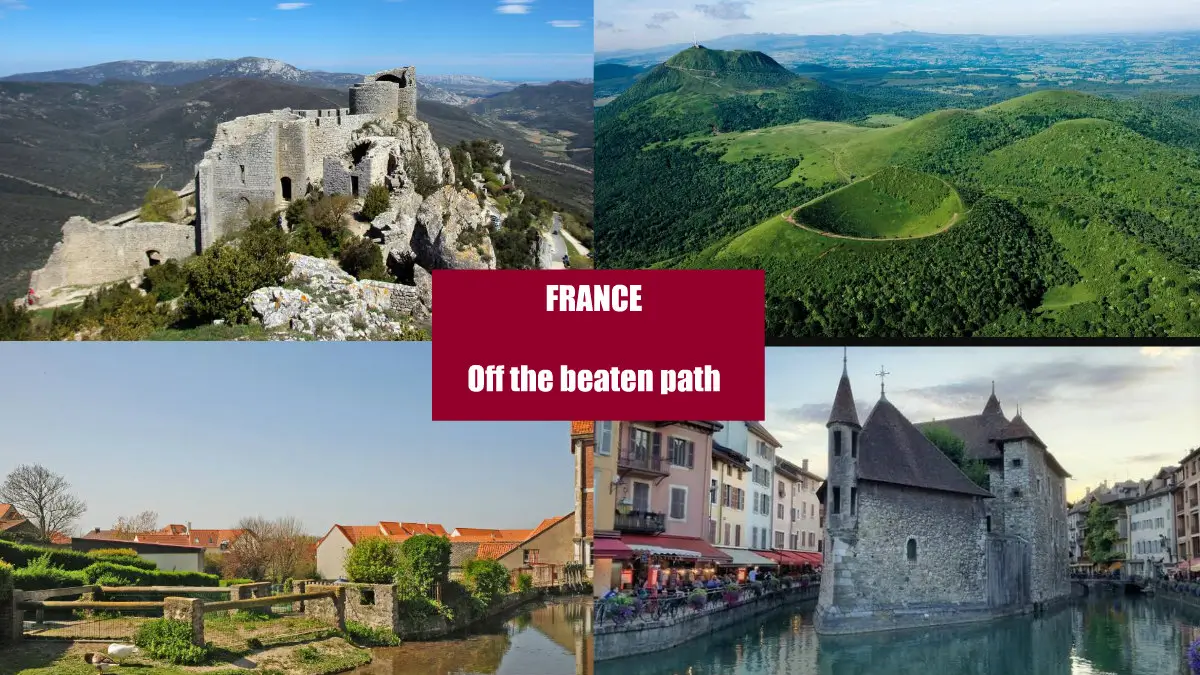
In this guide, we’ve handpicked 8 off the beaten path destinations in France, as a part of Western Europe, that reveal its local charm, natural beauty, and cultural depth. Whether you love hidden towns, scenic hikes, or unique cultural experiences, these gems will make your trip truly unforgettable.
France is known for its world-famous landmarks — Paris, the French Riviera, Mont Saint-Michel — but beyond these icons lies a quieter, more authentic France waiting to be explored. From medieval hilltop villages to secret coastal corners and fairytale châteaux, this country is full of places that remain off the tourist radar. You can compare all of these routes and book your travel using the official French railway site or popular European travel platforms:
- SNCF Connect (French Rail)
- Trainline (Aggregator)
- FlixBus (Bus)
- BlaBlaCar (Bus and Carpooling)
Disclosure: This post contains affiliate links. If you book or buy something through these links, we may earn a small commission — at no extra cost to you.
Here are 8 varied secret places in France that tourists don't visit as often:
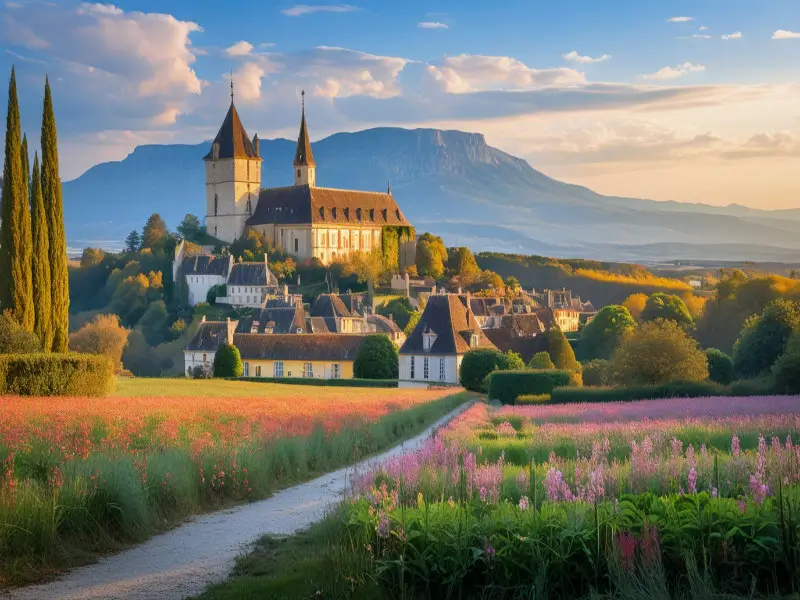
8 Off the Beaten Path Destinations in France
1. Gorges du Tarn – A Spectacular Natural Canyon in Southern France
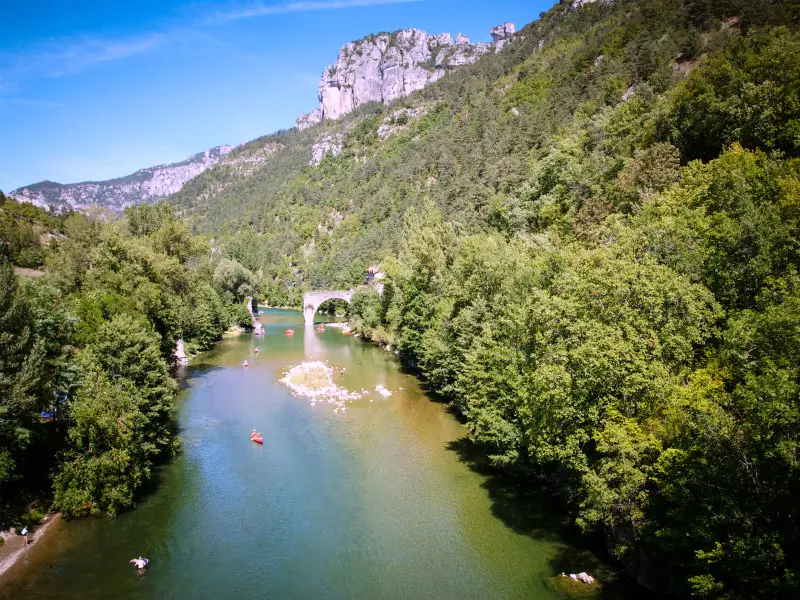
The Gorges du Tarn is one of France’s most breathtaking natural wonders — a deep limestone canyon carved by the Tarn River, stretching for over 50 km between Lozère and Aveyron in the south of France. Towering cliffs, turquoise waters, medieval villages like Sainte-Énimie and La Malène, and scenic hiking or kayaking routes make it a perfect off-the-beaten-path destination. It’s especially popular for outdoor lovers — ideal for canoeing, climbing, cycling, or simply enjoying the panoramic viewpoints.
🚆 How to Get There
By Train
The closest major train stations are:
- Millau (from Paris via Montpellier or Béziers, or from Toulouse)
- Mende (from Clermont-Ferrand or Nîmes)
From these towns, local buses, taxis, or rental cars can bring you closer to the canyon. If you arrive via Montpellier, you can reach Millau in about 2 hours by train.
By Bus
Regional bus services connect Millau or Mende with the villages around the Gorges, such as Sainte-Énimie. Bus lines are more frequent in summer, so checking local schedules in advance is recommended. Shuttle services for hikers and canoeists are also available during the tourist season.
By Car
Driving is the most flexible way to explore the Gorges du Tarn. From Montpellier, it takes about 2 hours (150 km) via the A75 motorway. The D907bis scenic road runs through the heart of the gorge, offering stunning viewpoints and access to small villages, campsites, and river spots.
2. 🐎 The Camargue – A Unique Wetland Landscape in Southern France
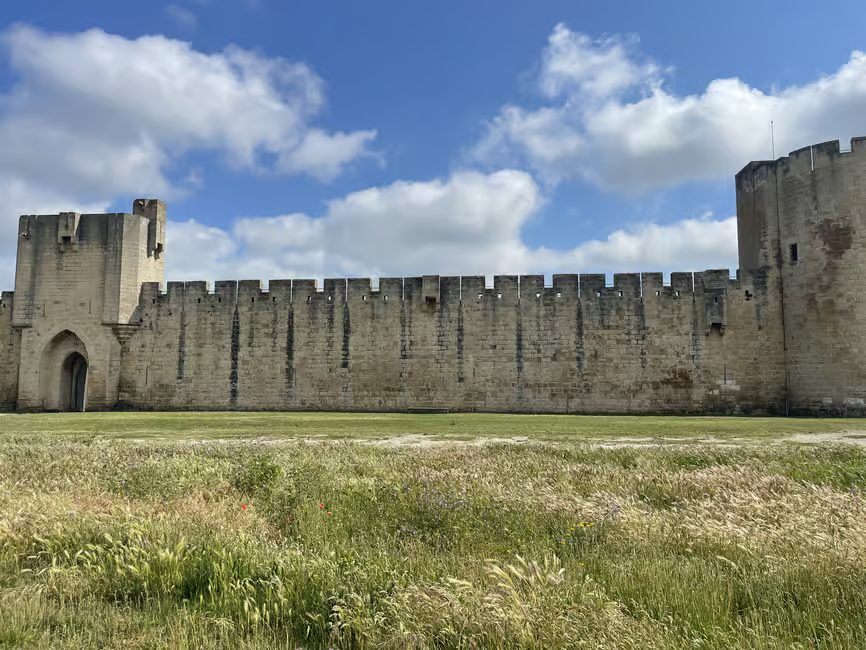
The Camargue is one of Europe’s most extraordinary natural regions — a vast delta of the Rhône River located between Arles and the Mediterranean Sea. Known for its wild white horses, pink flamingos, black bulls, and endless salt marshes, this Regional Natural Park is a paradise for birdwatchers, photographers, and nature lovers. It's one of the most interesting off the beaten path destinations in France.
Its open landscapes, traditional ranches (manades), and charming coastal villages like Saintes-Maries-de-la-Mer make it a perfect alternative France destination escape.
🚆 How to Get There
By Train
The most convenient gateway to the Camargue is Arles, which has regular train connections from:
- Marseille (approx. 1 hour)
- Avignon (approx. 30 minutes)
- Nîmes (approx. 35 minutes)
From Arles, you can continue by bus, taxi, or rental car to reach the heart of the Camargue and the seaside.
by bus
Regional buses operate from Arles to Saintes-Maries-de-la-Mer and other parts of the Camargue, especially during spring and summer. Seasonal shuttle services make it easy to explore the main natural sites without a car. Schedules may vary, so checking in advance is recommended.
by car
Driving offers the most flexibility to explore the Camargue’s protected areas and bird reserves.
- From Marseille, the drive takes about 1 hour 30 minutes.
- From Avignon, around 1 hour.
- From Montpellier, about 1 hour 15 minutes.
The D570 road connects Arles with Saintes-Maries-de-la-Mer, offering scenic views of the wetlands and wildlife along the way.
3. Jura Mountains – France’s Hidden Natural Gem
One of alternative France destinations are definitely – Jura Mountains. They stretch along the border between eastern France and Switzerland, forming one of the country’s most beautiful and underrated natural regions. Known for their emerald lakes, dramatic waterfalls, rolling vineyards, and peaceful forests, the Jura offer an authentic, slower-paced alternative to the Alps. It's one of the most interesting off the beaten path destinations in France.
This one of secret places in France is especially famous for the Cascades du Hérisson waterfalls, Lac de Chalain, panoramic viewpoints like Pic de l’Aigle, and the UNESCO-listed vineyards producing Comté cheese and vin jaune wine. Perfect for nature lovers, hikers, cyclists, and foodies, the Jura is ideal for a 2–5 day escape off the beaten path.
🚆 How to Get There
By Train
The easiest gateways to the Jura Mountains are:
- Dole — well connected to Paris (TGV ~2 h) and Lyon.
- Lons-le-Saunier — direct regional trains from Dijon and Besançon.
- Champagnole — for access to waterfalls, lakes, and hiking routes.
From these stations, you can connect with local buses, shuttles, or taxis to reach mountain villages and natural attractions. High-speed TGV trains make the Jura surprisingly accessible even without a car.
BY bus
Regional bus networks (TER Franche-Comté) serve Lons-le-Saunier, Pontarlier, and villages around the Hérisson waterfalls, especially in summer. Seasonal shuttle services often operate to popular natural sites like Cascades du Hérisson or Lac de Chalain. If visiting off-season, check timetables in advance or plan for taxi transfers.
by car
Driving is the most flexible way to explore the Jura Mountains:
- From Lyon: about 2 hours (A39 motorway)
- From Geneva: about 1.5 hours via Pontarlier
- From Dijon: about 2 hours
A car allows easy access to viewpoints, lakes, waterfalls, and vineyards in a single trip. Scenic routes like the Route des Lacs and Route du Comté offer spectacular landscapes and local stops.
👉 Travel Tip: For car-free travelers, base yourself in Lons-le-Saunier or Dole and book guided tours or local shuttles. For maximum flexibility, renting a car for a day or two is an excellent option.
🏞 3-Stop Itinerary – Discover the Jura Mountains
Escape to the heart of Bourgogne–Franche-Comté and explore waterfalls, vineyards, and alpine lakes. A perfect 2–3 day getaway or scenic day trip from Lyon, Geneva, or Dijon.
🌊 Cascades du Hérisson
A 7 km waterfall trail with over 30 cascades surrounded by lush forest. One of Jura’s most breathtaking natural sights.
🔗 TripAdvisor⭐ Rated 4.4/5 by 1,200+ travelers
🍷 Jérôme Arnoux Vins du Jura
Discover vin jaune, savagnin, and other Jura wines in a family-run cellar in Arbois — the heart of the region’s wine country.
🔗 TripAdvisor🍇 Arbois Wine Experience
🏞 Lac de Chalain
Crystal-clear lake surrounded by forested hills — perfect for walking, kayaking, or a peaceful picnic.
🌐 TripAdvisor💧 Scenic lake & hiking spot
Where to stay?
If you're exploring the Jura Mountains and the nearby Arbois wine region, staying in a charming local hotel or guesthouse is one of the best ways to experience the authentic countryside. Whether you prefer cozy inns, spa hotels, or family-run B&Bs, you’ll find plenty of options in these two beautiful towns:
- Where to stay in Arbois – Find charming hotels & guesthouses
- Where to stay in Lons-le-Saunier – Discover spa hotels & countryside stays
4. Saint-Cirq-Lapopie (Occitanie) — A Cliff-Hanging Medieval Gem
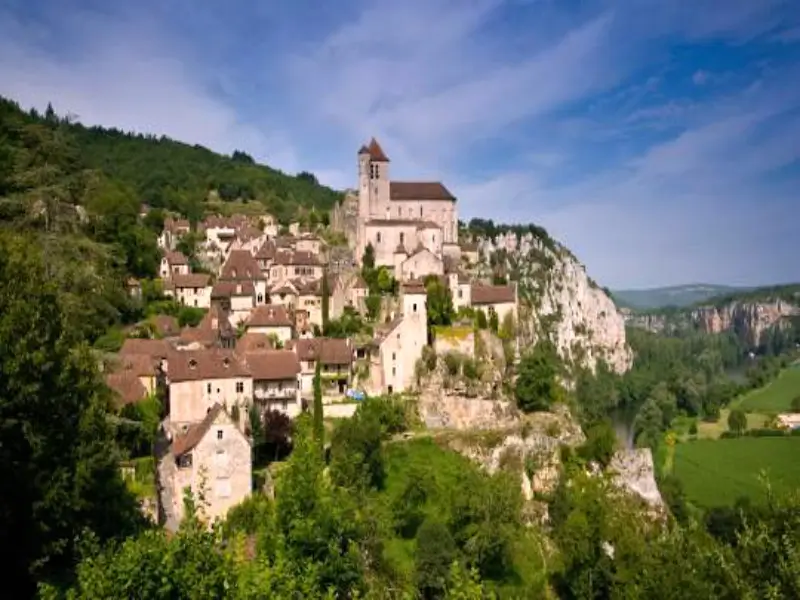
Perched dramatically about 100 m above the meandering Lot River, Saint-Cirq-Lapopie is one of France’s most romantic medieval villages. Its narrow, stone-paved alleys wind past ancient houses, flowered facades, and viewpoints that look as if they belong in a storybook. The village is part of the Parc naturel régional des Causses du Quercy and retains much of its historical character. It's considered as on of the most beautiful hidden gems in France.
Although as the secret places in France today, its location once gave it strategic importance: defensible, visible, and linked to old trade and river routes. It's one of the most interesting off the beaten path destinations in France.
How to Get to Saint-Cirq-Lapopie
Because Saint-Cirq-Lapopie as one off the beaten path destinations, sits off major transit lines, getting there involves a mix of train, bus and local road travel. Here are the usual options:
- By Train – Take a mainline train to Cahors (or to Figeac, depending on your origin). From Cahors, use the Occitanie regional liO (formerly “liO Car / liO Bus”) network, especially line 889, which runs between Figeac and Cahors and stops near Saint-Cirq-Lapopie.
- By Bus – The liO network connects local destinations including Cahors ⇄ Saint-Cirq-Lapopie (and sometimes seasonal routes) via line 889. Cahors – Vallée du Lot. In summer months, additional lines like line 878 may run directly between Cahors, Saint-Cirq-Lapopie and Cajarc.
- By Car / Driving – The village is accessed via the D8 road (Route de Saint-Cirq-Lapopie). You can approach from the west via D22 → D10 → D8, or from the east via D117 → D42 → D8. While you can drive through parts, road traffic inside the village is restricted, and most visitors park in upper or lower village car parks.
✨ Things to Do in Saint-Cirq-Lapopie
Discover the magic of this medieval clifftop village — scenic walks, historic lanes, and breathtaking views over the Lot Valley. Check tours and top experiences on Tripadvisor.
Explore Activities🏡 Where to Stay in Saint-Cirq-Lapopie
Enjoy charming B&Bs and cozy stone guesthouses with panoramic river views. Compare hotels and book the perfect stay through Tripadvisor.
View Hotels